Enterprise Rental Operations: A 2026 Executive Guide
Discover the definition of enterprise rental operations. Master the full rental asset lifecycle and gain a competitive edge in 2026.

Enterprise Rental Operations: A 2026 Executive Guide
Enterprise rental operations is defined as the integrated management of the full rental asset lifecycle, covering reservations, fleet maintenance, contract administration, billing, and logistics across multiple locations or large-volume portfolios. This discipline, also called enterprise rental management, is not simply running a bigger version of a small rental business. It requires five interconnected functions working in sync: reservations, owner and client relations, maintenance, logistics and housekeeping, and trust accounting. When any one function breaks down, margin erosion follows across the entire operation. Executives who understand this interdependence gain a structural advantage over those who treat each function as a separate department.
What is the definition of enterprise rental operations?
Enterprise rental operations is the centralized, coordinated management of all rental functions at scale, typically across multiple properties, locations, or a fleet of 20 to 300-plus assets. The term covers both the physical management of assets and the financial, contractual, and customer-facing processes that surround each rental transaction. Understanding rental operations at this level means recognizing that reservations, billing, maintenance, and logistics are not parallel tracks. They are a single, connected system.
The standard industry term for this discipline is “rental lifecycle management,” and it encompasses everything from the moment an asset is acquired to the point it is remarketed or retired. Enterprise rental management adds the complexity of scale: multiple client contracts, dynamic pricing across markets, multi-brand or multi-language requirements, and real-time reporting demands that small operators never face.
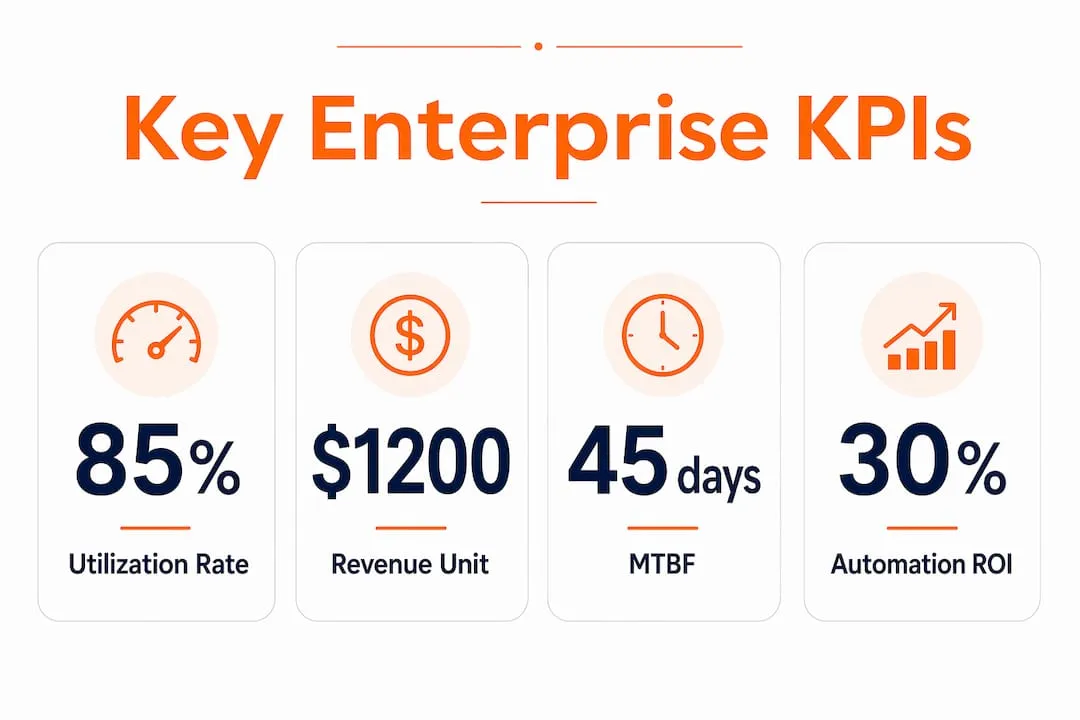
KPIs like utilization rate, revenue per available unit (RPAU), and mean time between failures (MTBF) are the core measurement tools of this discipline. These metrics are tracked hourly or daily in high-performing operations, not weekly or monthly. That frequency matters because a single day of unplanned downtime in a large fleet represents compounded revenue loss across multiple bookings.
What are the key components of enterprise rental management?
Enterprise rental operations integrate five core functions, and each one directly affects the others. A delay in maintenance scheduling reduces fleet availability. Reduced availability creates reservation gaps. Reservation gaps shrink revenue. That chain reaction is why executives must treat these components as a unified system, not a collection of departments.
The five core functions are:
- Reservations management: The operational heartbeat of any rental business. At enterprise scale, this means handling high-volume booking flows across multiple channels, applying dynamic pricing rules, and syncing availability in real time across all locations.
- Fleet maintenance and inspections: Asset longevity depends on scheduled preventive maintenance and rapid turnaround after each rental. Parallel reconditioning lanes with simultaneous intake, triage, maintenance, and safety certification stations minimize bottlenecks and keep fleet availability high.
- Contract management and pricing: Enterprise clients expect flexible, negotiated pricing tiers and contract terms that hold across locations. Centralized contract management prevents pricing inconsistencies that damage client trust.
- Billing and trust accounting: Billing is a revenue protection function, not an administrative one. Failing to capture granular rental activity, such as extras, usage overages, or damage charges, causes invisible revenue leakage that compounds over time.
- Logistics and housekeeping: Asset availability depends on timely turnaround between rentals. Housekeeping and logistics teams must operate on precise schedules tied directly to the reservations calendar.
Pro Tip: Map every function to a downstream dependency before you audit your operations. If billing is slow, check whether the issue originates in maintenance delays or incomplete inspection reports. The root cause is almost never where the symptom appears.
How do enterprise rental operations differ from small-scale management?
The difference between small-scale and enterprise rental management is not just volume. It is structural complexity. Enterprise fleets manage 20 to 300-plus assets for corporate clients, often under turnkey lifecycle agreements that include acquisition, fleet rotation, and remarketing. A small operator manages one location and one contract type. An enterprise operator manages dozens of both simultaneously.

Multi-location synchronization is the defining operational challenge at enterprise scale. A reservation made in one market must instantly update availability across all others. A maintenance event in one location must trigger rescheduling logic that protects bookings in adjacent markets. Without a unified CRM and centralized fleet management system, these dependencies create constant firefighting.
Multi-brand and multi-language support add another layer of complexity that small operators never encounter. Enterprise rental service providers often operate under multiple brand identities across different markets, each with its own pricing rules, contract templates, and customer communication standards. Centralized systems that enforce consistency across all of these variables are not optional at this scale. They are the foundation of operational control.
| Feature | Enterprise rental operations | Small-scale rental management |
|---|---|---|
| Fleet size | 20–300-plus assets | Fewer than 20 assets |
| Location management | Multi-location, synchronized | Single location |
| CRM complexity | Unified, multi-brand CRM | Basic contact management |
| Contract types | Corporate, negotiated, tiered | Standard consumer contracts |
| Pricing model | Dynamic, centralized rules | Fixed or manual pricing |
| Lifecycle scope | Acquisition through remarketing | Rental period only |
| Reporting cadence | Real-time, hourly or daily | Weekly or monthly |
What KPIs define success in enterprise rental operations?
Three KPIs define operational health in enterprise rental management: utilization rate, RPAU, and MTBF. Each one reveals a different dimension of performance, and tracking all three together gives executives a complete picture of where revenue is being captured and where it is being lost.
- Utilization rate: The percentage of time an asset is actively rented versus sitting idle. A high utilization rate signals strong demand capture. A low rate signals either pricing problems, availability gaps, or maintenance delays.
- Revenue per available unit (RPAU): Total revenue divided by the number of available rental units over a given period. RPAU exposes whether pricing strategy is keeping pace with demand, independent of occupancy.
- Mean time between failures (MTBF): The average time an asset operates before requiring unplanned maintenance. A rising MTBF indicates effective preventive maintenance. A falling MTBF signals deferred maintenance catching up with the fleet.
AI-driven platforms report ROI within 3–6 months for operations that adopt automated KPI tracking. That timeline reflects how quickly real-time data visibility eliminates the revenue leakage that manual reporting misses. Executives who wait for end-of-week reconciliations to spot problems are always reacting. Those who track KPIs in real time are preventing problems before they compound.
Pro Tip: Data fragmentation is the most common KPI trap. If your utilization rate comes from one system, your RPAU from another, and your MTBF from a spreadsheet, you are not tracking performance. You are assembling a delayed, incomplete picture. Consolidate your data sources before you trust any metric.
What technology powers enterprise rental operations at scale?
The most effective control in enterprise rental management comes from a single source of truth system that links reservations, maintenance, billing, and accounting in one connected platform. Fragmented, siloed software creates avoidable idle time and margin erosion even when each individual tool works well in isolation. The problem is the gaps between tools, where data is lost, delayed, or duplicated.
Centralized rental platforms handle reservation management, trust accounting, owner portals, housekeeping, maintenance work orders, channel management, and CRM with real-time integration. That integration eliminates the manual reconciliation that consumes management time and introduces errors. As portfolio sizes grow, the cost of manual reconciliation grows faster than the portfolio itself.
AI-powered platforms add a layer of automation that changes how executives interact with operational data. Instead of pulling reports, managers receive alerts when a KPI crosses a threshold. Instead of scheduling maintenance manually, the system triggers work orders based on usage data and inspection results. Realtevoos applies this model to vacation rental portfolios, using AI-driven automation to consolidate workflows across multiple properties and deliver real-time insights from booking channels directly into a single dashboard.
| Platform capability | Why it matters at enterprise scale |
|---|---|
| Real-time reservation sync | Prevents double bookings and availability gaps across locations |
| Automated billing capture | Closes revenue leakage from missed extras and usage charges |
| Maintenance work order integration | Links asset condition directly to availability and scheduling |
| Trust accounting | Protects owner funds and ensures regulatory compliance |
| AI-driven KPI alerts | Replaces reactive reporting with proactive performance management |
| Channel management | Synchronizes pricing and availability across all booking platforms |
Executives evaluating platforms should prioritize integration depth over feature count. A platform with 50 features that do not share data is less valuable than one with 20 features that operate as a single system. The right rental management platform connects every operational function to a shared data layer that updates in real time.
Key Takeaways
Enterprise rental operations succeeds when all five core functions, reservations, maintenance, billing, logistics, and trust accounting, operate as a single connected system rather than separate departments.
| Point | Details |
|---|---|
| Integrated lifecycle management | Enterprise rental operations covers the full asset lifecycle, from acquisition through remarketing, not just the rental period. |
| Five interdependent functions | Reservations, maintenance, billing, logistics, and trust accounting must connect or margin erosion follows. |
| Real-time KPI tracking | Utilization rate, RPAU, and MTBF must be tracked daily or hourly to capture demand and prevent revenue loss. |
| Single source of truth | Fragmented software creates idle time and leakage; a unified platform eliminates both. |
| Execution over expansion | The rental industry is shifting from growth-driven to execution-driven operations, where data discipline defines success. |
What I have learned running enterprise rental operations at scale
The most persistent mistake I see executives make is treating their rental operation as a collection of departments that happen to share a building. Reservations talks to sales. Maintenance talks to the fleet manager. Billing talks to finance. Nobody talks to everybody at the same time, and the gaps between those conversations are where revenue disappears.
The shift that changes everything is treating the operation as a single organism. When a maintenance event happens, the reservation system should know immediately. When a booking is confirmed, the housekeeping schedule should update automatically. When a billing exception occurs, the operations manager should see it before the invoice goes out. That level of connection is not a technology problem. It is a design problem. Most operations are not designed for it.
The rental industry’s shift toward execution-driven operations is the most important structural change I have seen in this space. Fleet size no longer determines who wins. Data discipline does. The operators who will lead their markets in 2026 and beyond are the ones who have invested in connected systems and real-time visibility, not the ones with the largest fleets.
My practical recommendation: before you add a single asset to your portfolio, audit whether your current systems can tell you, in real time, the utilization rate, maintenance status, and billing accuracy for every asset you already own. If they cannot, adding more assets will only amplify the problems you already have. Fix the system first. Then scale.
— Jose Villeda
Realtevoos: a command center for enterprise rental operations
Running a multi-property rental operation without a connected system is like managing a flight schedule with separate spreadsheets for gates, crews, and aircraft. Realtevoos was built to solve exactly that problem for vacation rental property managers.
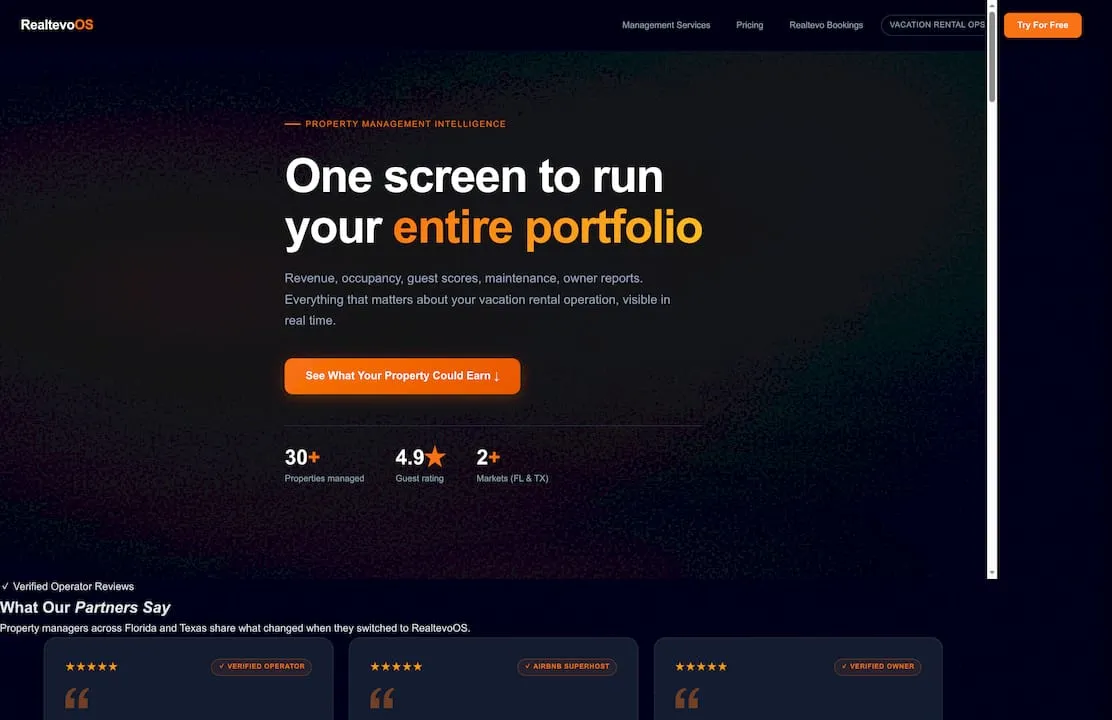
Realtevoos consolidates reservations, billing, maintenance, housekeeping, and owner accounting into one AI-powered platform. It pulls real-time data from Airbnb, Vrbo, and other booking channels directly into a single dashboard, so executives see the full operational picture without switching between tools. Property managers report saving several hours each week by replacing manual reporting with automated workflows. The Realtevoos command center gives growing portfolios the operational infrastructure to scale without losing service quality or control. If you manage multiple properties and want real-time KPI visibility without the manual overhead, explore Realtevoos to see how the platform fits your operation.
FAQ
What is the definition of enterprise rental operations?
Enterprise rental operations is the integrated management of the full rental asset lifecycle, including reservations, maintenance, billing, logistics, and trust accounting, across multiple locations or large-volume portfolios. It is also called rental lifecycle management in industry practice.
How do enterprise rental operations differ from standard rental management?
Enterprise operations require multi-location synchronization, unified CRM, dynamic pricing, and turnkey lifecycle management from acquisition through remarketing. Standard rental management typically covers a single location with fixed pricing and basic contract types.
What KPIs should executives track in enterprise rental management?
The three core KPIs are utilization rate, revenue per available unit (RPAU), and mean time between failures (MTBF). High-performing operations track these metrics daily or hourly to catch revenue leakage and maintenance issues before they compound.
Why does fragmented software hurt enterprise rental operations?
Disconnected tools create data gaps between reservations, maintenance, and billing that cause avoidable idle time and revenue leakage. A single connected platform eliminates those gaps by sharing data across all functions in real time.
How does AI improve enterprise rental management?
AI-powered platforms automate KPI alerts, maintenance scheduling, billing capture, and guest communications, replacing reactive reporting with proactive management. Platforms using AI-driven automation report ROI within 3–6 months of adoption in high-volume rental operations.