Growth Tools for Property Managers: 2026 Guide
Discover the importance of growth tools for property managers in 2026. Learn how technology can enhance service and support portfolio expansion.

Growth Tools for Property Managers: 2026 Guide
Growth tools for property managers are defined as the software platforms, AI-driven systems, and integrated workflows that enable vacation rental operators to scale their portfolios without sacrificing service quality. The importance of growth tools for property managers has never been clearer: over 75% of property management businesses plan portfolio expansion in 2026, with one in three targeting growth above 25%. That level of ambition demands more than good intentions. It requires documented SOPs, cloud-based platforms, and AI-powered automation working together as a system. Property managers who treat technology as optional will find themselves outpaced by those who treat it as infrastructure.
Why the importance of growth tools for property managers is a 2026 priority
Growth tools in property management refer to the technology stack that handles everything from rent collection and maintenance requests to guest communication and performance reporting. The industry term for this category is “property management software,” though modern platforms extend well beyond basic accounting into AI, predictive analytics, and resident experience management.
The scale of ambition among property managers this year makes the right tools non-negotiable. 33% of firms target growth above 25% in portfolio size. That kind of expansion breaks manual systems fast. A manager handling 20 vacation rental units with spreadsheets and email threads cannot realistically manage 60 units the same way without burning out staff and frustrating guests.
Cloud-based platforms solve this by centralizing data, automating repetitive tasks, and giving managers a single dashboard instead of five disconnected apps. The shift from manual to integrated management is not a luxury upgrade. It is the structural foundation that makes growth sustainable.
How do growth tools enhance operational efficiency for property managers?
Operational efficiency in property management means doing more work with the same or fewer resources. Growth tools deliver this through automation, integration, and AI-driven decision support.
Key operational gains property managers report when adopting integrated platforms include:
- Automated rent collection and payment tracking eliminate manual follow-ups and reduce late payment rates.
- Maintenance request portals route work orders directly to vendors, cutting response time and reducing staff interruptions.
- AI-powered tenant screening identifies fraud risk and predicts long-term rental behavior before a lease is signed.
- Predictive maintenance alerts flag equipment issues before they become expensive repairs, protecting both the property and the guest experience.
- Centralized communication logs give every team member full context on any guest or owner interaction.
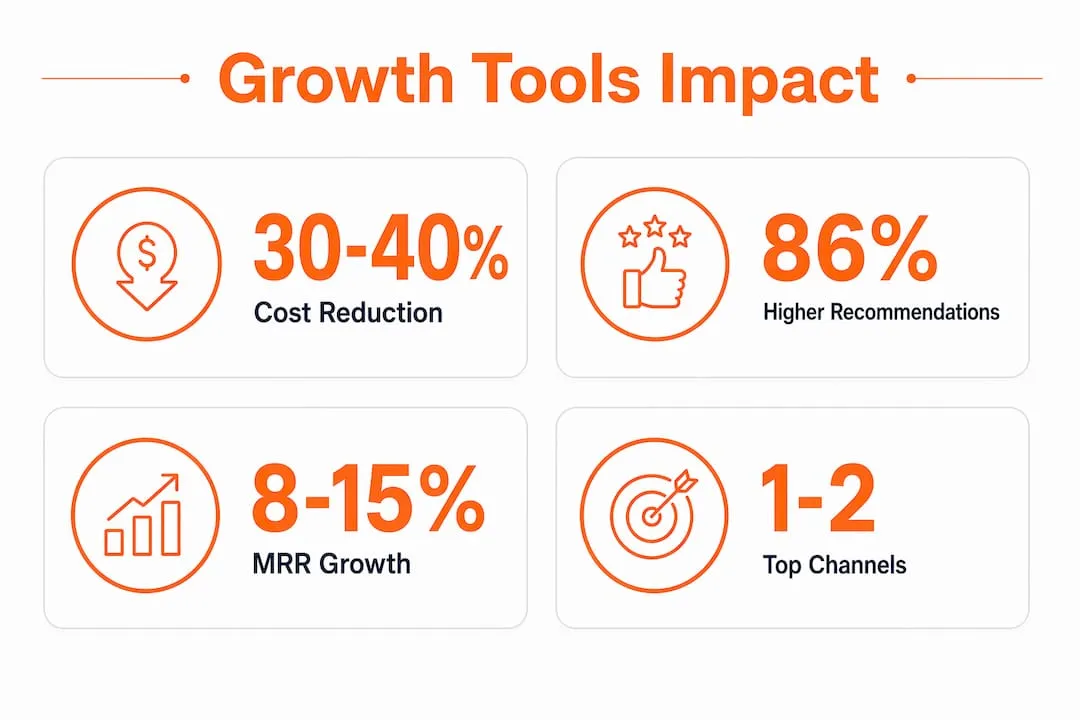
Integrated management platforms reduce operational costs by 30–40% compared to manual processes. That is not a marginal improvement. It represents tens of thousands of dollars annually for a mid-size portfolio. Property managers using software also handle 2–3 times more units per staff member, which means growth does not require proportional hiring.
Guest satisfaction follows the same pattern. Automated communication portals produce 86% higher guest recommendation rates when move-in and check-in experiences are handled well. That figure reflects a direct link between operational systems and revenue outcomes.
Pro Tip: Start your automation with the single highest-friction task your team handles daily. For most vacation rental managers, that is guest messaging. Automating check-in instructions, house rules, and review requests alone can recover several hours per week before you touch anything else.
What growth strategies leverage technology and growth tools effectively?
Growth strategies for property managers fall into three categories: portfolio expansion, revenue optimization, and lead generation. Technology tools support all three, but only when aligned with clear targets.
-
Set a Monthly Recurring Revenue growth target. Healthy property management companies target 8–15% MRR growth annually through new client acquisition and portfolio expansion. Without a number, growth becomes reactive rather than planned.
-
Build an SEO-optimized website with a CRM attached. Organic search drives inbound leads at a lower cost than paid advertising. A CRM captures those leads and triggers automated follow-up sequences, so no inquiry goes cold.
-
Respond to leads within five minutes. Speed of response is one of the strongest predictors of conversion in property management sales. Automated lead routing and notification systems make this achievable at scale.
-
Focus expansion on high-performing property types and markets. Aligning expansion goals with investor sentiment and realistic portfolio capacity prevents overextension. Adding 30 units in a weak market hurts more than it helps.
-
Build a referral program with clear incentives. Existing owners and guests are the lowest-cost source of new business. A simple referral fee or service credit, managed through your platform, turns satisfied clients into a sales channel.
-
Integrate digital marketing with your operational data. Platforms that connect booking performance, occupancy rates, and guest reviews to your marketing dashboard let you promote what actually converts, not what you assume works.
Pro Tip: Track your lead-to-close ratio by source every month. Most managers discover that one or two channels produce 80% of their new business. Doubling down on those channels, rather than spreading budget thin, is the fastest path to MRR growth.
Understanding how data drives rental strategy is the foundation every growth plan needs before adding new tools or markets.
What are the essential growth tools property managers should prioritize in 2026?
The core technology categories every vacation rental manager needs in 2026 are well established. The question is not whether to adopt them but which platforms deliver the most integrated value.

Property management software with built-in accounting and reporting is the non-negotiable foundation. Platforms that separate accounting into a third-party tool create reconciliation errors and reporting delays. Integration matters.
Resident Experience Platforms (RXPs) handle the full guest lifecycle: pre-arrival communication, digital check-in, in-stay support, and post-stay review requests. RXPs reduce the manual labor of guest communication while improving satisfaction scores.
AI-driven pricing tools adjust nightly rates based on demand signals, local events, and competitor occupancy. Static pricing leaves revenue on the table every week.
Cloud-based infrastructure with role-based access controls lets distributed teams work from any location without creating security gaps. This is the baseline for any manager running more than one property.
| Tool category | Primary function | Key benefit |
|---|---|---|
| Property management software | Operations and accounting | Reduces cost by 30–40% |
| Resident Experience Platform | Guest communication | Lifts recommendation rates |
| AI pricing engine | Dynamic rate setting | Captures demand-based revenue |
| CRM with lead automation | Lead capture and follow-up | Shortens sales cycle |
| Predictive maintenance system | Equipment monitoring | Prevents costly repairs |
Fragmented software stacks create a tax on staff productivity, resident retention, and owner confidence. Every disconnected tool your team uses adds cognitive load and increases the chance of errors. The goal is consolidation, not accumulation.
Reviewing AI trends in property management shows how quickly the gap between integrated and fragmented operators is widening this year.
How can property managers implement growth tools effectively to scale without losing service quality?
Implementation is where most growth plans fail. The tools exist. The challenge is adopting them in a way that sticks.
-
Document your SOPs before automating anything. Growth without structure is chaos, regardless of portfolio size. A platform cannot automate a process that has never been written down. Map your current workflows first, then identify which steps a tool can handle.
-
Limit your software stack to core platforms. Three well-integrated tools outperform eight loosely connected ones. Each additional disconnected system adds training time, integration costs, and failure points.
-
Start automation with the highest-friction workflows. Maintenance routing, guest messaging, and owner reporting are the three areas where manual work consumes the most time. Automate these first before moving to secondary processes.
-
Preserve personal outreach at key moments. Automation should complement, not replace, personal communication during onboarding and renewals. A personal call at lease renewal or a handwritten welcome note at check-in costs almost nothing and dramatically improves retention.
-
Train your team in phases, not all at once. Rolling out a new platform to your entire team simultaneously creates resistance and errors. Train one workflow at a time, confirm adoption, then move to the next.
The rental operations scaling process requires the same discipline as any other business system. Technology accelerates good processes. It amplifies bad ones.
Understanding guest experience fundamentals also helps managers decide where automation ends and personal service must begin, a distinction that separates average operators from exceptional ones.
Key Takeaways
Growth tools for property managers work because they replace fragmented, manual processes with integrated systems that scale without proportional increases in staff or cost.
| Point | Details |
|---|---|
| Automation cuts costs sharply | Integrated platforms reduce operational costs by 30–40% compared to manual management. |
| Productivity multiplies with software | Managers using software handle 2–3 times more units per staff member. |
| Fragmented stacks hurt performance | Each disconnected tool adds cost in retention, team efficiency, and owner confidence. |
| Growth needs structure first | Document SOPs and define roles before automating any workflow. |
| Guest experience drives revenue | Automated communication at key moments lifts guest recommendation rates significantly. |
The tools matter less than the system behind them
I have watched property managers spend months evaluating platforms and then fail to see results because they skipped the step that actually matters: building the system the tool runs inside.
The industry conversation about growth tools tends to focus on features. AI pricing, predictive maintenance, dynamic reporting. Those features are real and they deliver value. But a manager who adopts an AI pricing engine without a clear revenue target and a process for acting on its recommendations will not see the gains the tool promises.
What I have found consistently is that the managers who scale well treat technology as a system component, not a solution. They define what success looks like first. They document how their team works. Then they select tools that fit that structure. The ones who do it in reverse, buying tools and hoping the system emerges, end up with expensive software and the same problems they started with.
The other thing most articles miss: the human layer does not shrink when you automate. It shifts. Your team stops spending time on data entry and starts spending it on owner relationships, guest escalations, and market analysis. That shift is only valuable if you plan for it. If you automate without redeploying your team’s capacity, you just have faster chaos.
The best growth strategy for 2026 is not the one with the most tools. It is the one with the clearest structure, the fewest integration gaps, and a team that knows exactly what the technology handles and what they handle.
— Jose Villeda
How Realtevoos supports property managers scaling in 2026
Property managers who want to grow their vacation rental portfolios without adding proportional overhead need a platform built for exactly that challenge. Realtevoos consolidates operational workflows across multiple properties into a single management command center, giving managers real-time visibility across their entire portfolio from one dashboard.
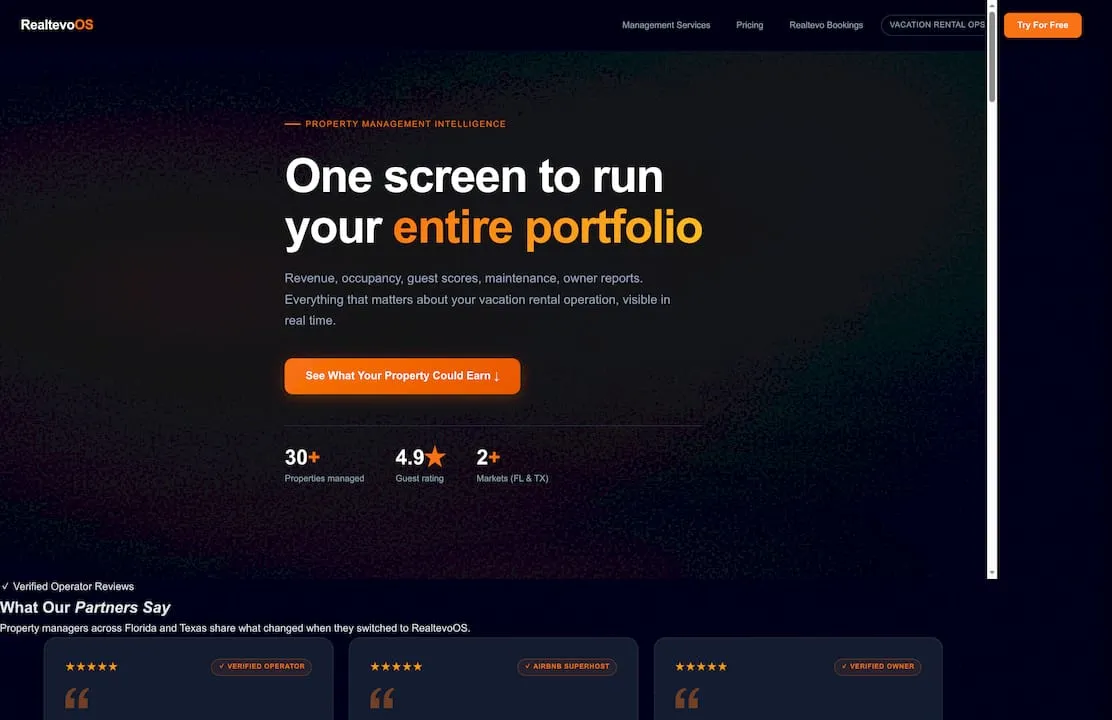
Realtevoos integrates live data from Airbnb and Vrbo, automates guest communications, and delivers AI-driven insights that replace hours of manual reporting each week. Property managers using the platform report saving several hours weekly while improving guest satisfaction scores. The platform is built to grow with your portfolio, whether you manage 10 units or 100, without requiring a proportional increase in staff or systems. If scaling without losing service quality is the goal, Realtevoos is built for that outcome.
FAQ
What are growth tools for property managers?
Growth tools for property managers are software platforms and AI-driven systems that automate workflows, centralize data, and support portfolio expansion. They include property management software, CRM systems, AI pricing engines, and resident experience platforms.
How much can growth tools reduce operational costs?
Integrated property management platforms reduce operational costs by 30–40% compared to manual processes. That reduction comes from automating rent collection, maintenance routing, and guest communication.
What is the recommended MRR growth rate for property management companies?
Healthy property management companies target 8–15% Monthly Recurring Revenue growth annually through new client acquisition and portfolio expansion. Exceeding that range without matching operational capacity risks service quality.
How do I implement growth tools without disrupting my team?
Start by documenting your current workflows and SOPs before adopting any new platform. Roll out automation one workflow at a time, confirm team adoption, and preserve personal outreach at high-value touchpoints like onboarding and renewals.
Why do fragmented software stacks hurt property management businesses?
Each disconnected tool adds training time, integration costs, and error risk. Fragmented stacks create a measurable tax on staff productivity, resident retention, and owner confidence, making consolidation onto fewer, well-integrated platforms the stronger long-term choice.