Vacation Rental Pest Control: A Guide for Property Managers
Vacation rental pest control for property managers: prevent bed bugs, cockroaches and rodents, check during turnovers and respond fast to guest reports.

Vacation rental pest control means preventing, spotting and responding to bed bugs, cockroaches, rodents and other pests before a guest finds them. The most reliable approach combines integrated pest management, quick checks during every turnover, and a written response plan with a licensed professional on call.
Key Takeaways
Vacation rental pest control works when prevention and early detection are built into turnovers and maintenance, with professionals handling treatment.
| Point | Details |
|---|---|
| Use IPM | Monitor, identify, prevent and then treat with targeted methods instead of spraying on autopilot. |
| Check every turnover | Inspect mattress seams, bed frames and nearby furniture for physical signs, not bites. |
| Seal and sanitize | Close gaps, fix leaks and manage trash so cockroaches and rodents have nothing to live on. |
| Have a response plan | Acknowledge guest reports fast, gather photos, log a ticket and call a professional. |
| Document everything | Dated photos and service reports protect guests, owners and your team. |
Table of Contents
- What Is Vacation Rental Pest Control?
- Why Are Short-Term Rentals at Higher Risk for Pests?
- Which Pests Should Property Managers Watch For?
- How Does Integrated Pest Management Work in a Rental?
- How Do You Check for Bed Bugs During a Turnover?
- How Do You Keep Cockroaches and Rodents Out?
- What Should You Do When a Guest Reports Pests?
- How Do You Choose a Pest Control Professional?
- What Operators Get Wrong About Vacation Rental Pest Control
- How RealtevoOS Handles Pest Reports and Follow-Up
- Frequently Asked Questions
- Sources
What Is Vacation Rental Pest Control?
Vacation rental pest control is the routine of preventing, detecting and responding to insects and rodents in a short-term rental so guests never become the people who find them.
Because a vacation rental can sit empty between stays and change hands every few days, pest control is less about a single spray and more about a routine: who looks, what they look for and what happens next.
- Prevention — sealing entry points, managing food and trash, and reducing the clutter pests use for shelter.
- Detection — building quick, repeatable checks into every turnover and every scheduled inspection.
- Response — a written plan for guest reports, professional treatment and rebooking decisions.
Why Are Short-Term Rentals at Higher Risk for Pests?
Short-term rentals see a steady flow of luggage, groceries and furniture from many households, which gives hitchhiking pests more chances to arrive and more time to settle in unnoticed.
The University of California Statewide IPM Program notes that people can bring bed bugs home on luggage, clothes, bedding and furniture, and that hotels and furnished apartments are among the places most at risk (UC IPM — Bed Bugs). A furnished vacation home shares many of the same traits.
- High guest turnover — every arrival can bring pests in with bags or belongings.
- Food left behind — guests leave groceries, open snacks and full trash cans that attract pests between cleans.
- Fast turnovers — cleaners focused on speed may not be trained to recognize early signs of an infestation.
Which Pests Should Property Managers Watch For?
The pests to plan around are bed bugs, cockroaches and rodents, plus seasonal invaders such as ants that vary by region and building type.
- Bed bugs — the EPA describes adults as about the size of an apple seed, roughly 5–7 mm long, flat and brown when unfed (EPA — Bed Bugs: Appearance and Life Cycle). Look-alikes such as carpet beetles are common, so accurate identification matters.
- Cockroaches — UC IPM says German cockroaches favor kitchens and bathrooms and that an adult can hide in a crack about 1/16 inch wide (UC IPM — Cockroaches).
- Rats and mice — rodents contaminate food and gnaw on wiring and wood; UC IPM lists droppings near food areas and pet food containers as a common sign (UC IPM — Rats).
- Seasonal invaders — ants, spiders and stinging insects show up with weather changes; a local pest professional can tell you which ones are typical for your market.
How Does Integrated Pest Management Work in a Rental?
Integrated pest management (IPM) works in a rental by combining monitoring, accurate identification, prevention and targeted treatment, instead of spraying on a fixed schedule whether pests are present or not.
The U.S. Environmental Protection Agency describes IPM as a four-tiered approach: set action thresholds, monitor and identify pests, prevent them, and then control them using effective, less risky methods first (EPA — Integrated Pest Management Principles). The EPA also notes that sighting a single pest does not always mean control is needed. In a rental, that looks like this:
- Set action thresholds — decide in advance what triggers a professional visit, such as any sign of bed bugs or rodents indoors.
- Monitor and identify — place sticky traps in kitchens and under sinks, and photograph anything unusual for identification.
- Prevent — seal gaps, fix leaks, store supplies in sealed bins and keep outdoor trash closed and away from doors.
- Control — when treatment is needed, use a licensed professional who chooses targeted methods and follows the product label.
If you log maintenance in a platform like RealtevoOS, pest checks can live alongside every other recurring task.
How Do You Check for Bed Bugs During a Turnover?
You check for bed bugs during a turnover by giving cleaners a short, consistent inspection of the bed and nearby furniture, with a clear rule to stop and report rather than treat anything themselves.
The EPA explains that bites are a poor indicator of bed bugs and that looking for physical signs is more accurate: rusty or reddish stains, dark spots of excrement, and tiny pale eggs and eggshells about 1 mm long (EPA — How to Find Bed Bugs). UC IPM adds that current research finds about 85% of bed bugs in or near the bed, with the rest typically in upholstered furniture, along baseboards, under wallpaper and in similar hiding spots (UC IPM — Bed Bugs).
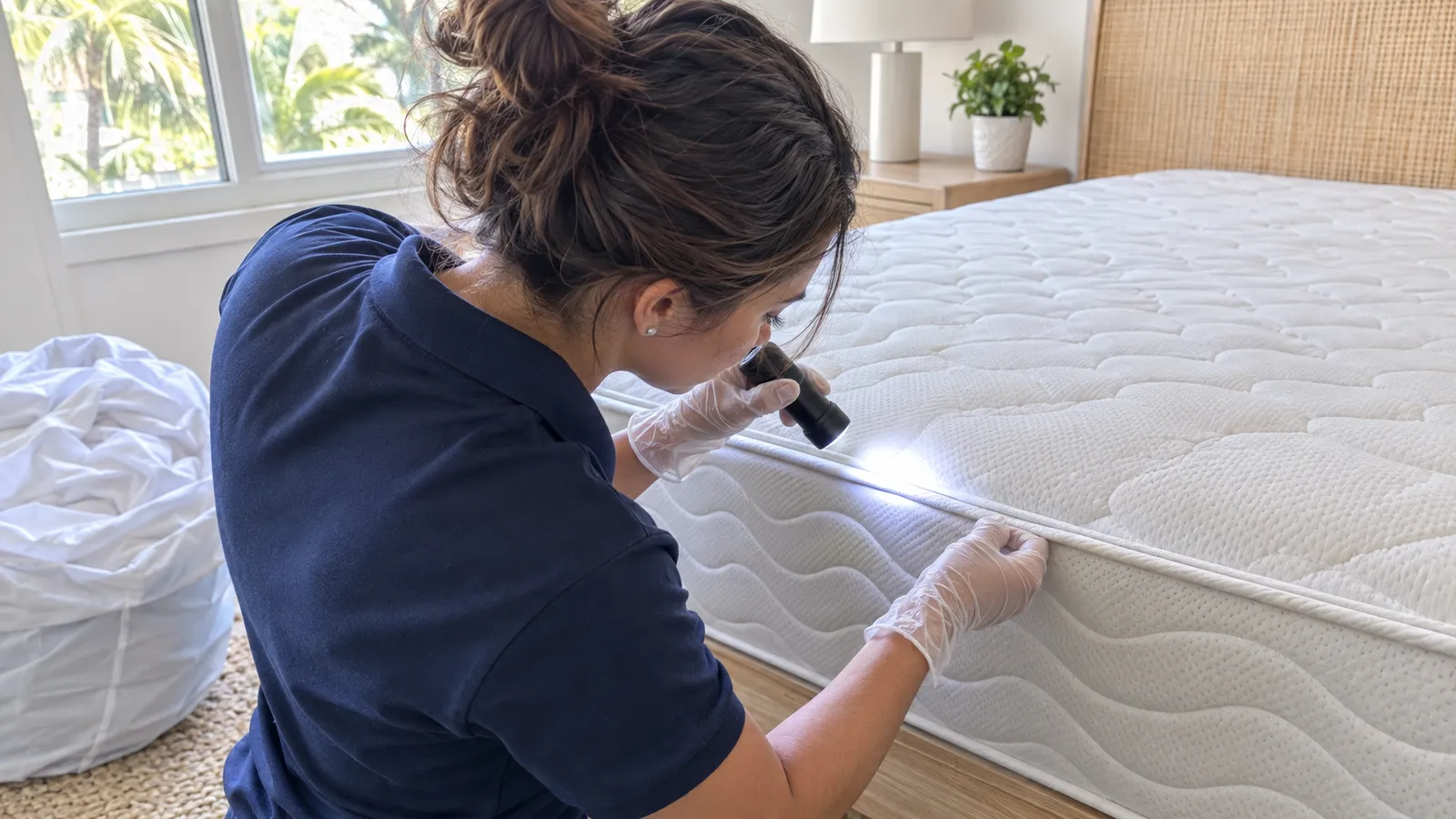
A turnover-friendly bed bug check looks like this:
- Strip the bed and look at the mattress seams, piping, tags and corners with a flashlight.
- Check the box spring or bed base, the bed frame joints and the back of the headboard.
- Look along the nearest baseboards and around nightstands, focusing on cracks and crevices.
- Inspect upholstered chairs or sofas used for sleeping, including seams and under cushions.
- If anything looks suspicious, stop, photograph it, bag the linens and report it before the next guest arrives.
- Do not move furniture or linens from that room to another unit until the report is reviewed.
Mattress and box spring encasements make this check faster. The National Pesticide Information Center notes that encasements trap bugs already inside, remove hiding areas and make future inspections easier (NPIC — Bed Bugs). For more on structuring room-by-room checks, see our guide to inspection checklist automation.
How Do You Keep Cockroaches and Rodents Out?
You keep cockroaches and rodents out by removing the food, water and shelter they need and by sealing the gaps they use to get inside.
UC IPM is direct about this: good sanitation and exclusion are important, and pesticides alone will not solve cockroach problems (UC IPM — Cockroaches). For rats, it recommends sealing cracks and openings larger than 1/4 inch with steel wool, wire screen or sheet metal, because rats can chew through plastic, foam, wood and caulk (UC IPM — Rats).
- Clean behind appliances — deep clean behind the stove and refrigerator on a schedule.
- Fix leaks fast — dripping faucets and wet cabinets give cockroaches the moisture they need.
- Seal entry points — check door sweeps, weather stripping, window screens and utility penetrations during scheduled maintenance visits.
- Manage trash — use containers with tight-fitting lids and tell guests where trash goes.
Add these items to your recurring property checklist so they are verified on a schedule, not only after a complaint. Our vacation rental maintenance checklist is a good place to slot them in.
What Should You Do When a Guest Reports Pests?
When a guest reports pests, respond quickly and calmly, gather photos, decide whether the guest can stay, and get a qualified professional to identify the problem before you treat or rebook.
The National Pesticide Information Center's first piece of bed bug advice is not to panic, because quick, rash decisions can lead to unneeded, costly and dangerous actions (NPIC — Bed Bugs). A written plan keeps your team consistent:
- Acknowledge the message right away and thank the guest for telling you.
- Ask for photos of what they found and where.
- Decide whether the guest can stay, needs a different room, or needs to be relocated, based on the pest and your policy.
- Create a maintenance ticket with the photos, room, time and guest description.
- Schedule a pest professional to identify the pest and recommend treatment.
- Block the calendar if the professional advises it, and hold the next arrival until the unit is cleared.
- Follow up with the guest and the owner once the visit is complete, and record the outcome.
How Do You Choose a Pest Control Professional?
Choose a pest control professional who is licensed in your state, experienced with the specific pest, uses an IPM approach and documents every visit.
- Experience with the pest — UC IPM recommends hiring a reputable company with experience managing bed bugs, since confirmed infestations should be handled by trained professionals.
- Inspection before treatment — a good provider identifies the pest and the source before applying anything, which matches the EPA's IPM guidance.
- Follow-up monitoring — bed bug treatment often needs a second visit; NPIC notes many insecticides do not kill eggs, so a follow-up treatment is often necessary.
- Label compliance — the EPA notes that pesticide labels are legally enforceable and that using a product inconsistent with its labeling violates federal law (EPA — Introduction to Pesticide Labels).
- Written reports — ask for a service report listing what was found and applied.
What Operators Get Wrong About Vacation Rental Pest Control
The most common mistake is treating pest control as a vendor's job alone, when most prevention and early detection actually happens during turnovers and routine maintenance.
- Relying on bites — the EPA notes bed bug bites can look like other insect bites or rashes, and some people don't react at all; physical signs are the real evidence.
- DIY spraying — over-the-counter sprays used off-label can be unsafe for guests and pets, and UC IPM notes that few over-the-counter bed bug products have been shown to be effective.
- Moving infested items — carrying linens or furniture from one unit to another can spread bed bugs across your portfolio.
- No paper trail — without dated photos and service reports, it is hard to answer owner questions or show what was done.
- Skipping crew training — cleaners see problems first only if they know what to look for. Our guide to multi-property cleaning team coordination covers how to roll out new standards across crews.
How RealtevoOS Handles Pest Reports and Follow-Up
RealtevoOS gives operators one place to receive pest reports, turn them into maintenance work and keep the record.
- Unified guest inbox — guest messages from your booking channels and direct bookings arrive in one inbox, so a pest report is seen by the team instead of sitting in a single phone.
- AI that learns your SOPs — you can teach the AI your pest response steps, so replies and next actions follow your written plan.
- Maintenance tracking — reports become tracked maintenance tickets with notes and photos, from first message to the professional's visit and follow-up.
- Turnover coordination and inspections — cleaner scheduling, job tracking and quality inspections help you build pest checks into the turnover routine.
- Owner reports — monthly owner reports include maintenance logs, so owners can see what was found and what was done.
RealtevoOS does not treat pests or replace a licensed pest control professional; it helps your team spot problems earlier, respond consistently and keep the paper trail.
Frequently Asked Questions
How often should a vacation rental be checked for pests?
Do a quick visual check during every turnover, especially around beds, kitchens and trash areas, and schedule a deeper inspection as part of routine maintenance. Ask a local pest professional how often they should visit.
Can cleaners treat bed bugs themselves?
Cleaners should not treat bed bugs themselves. UC IPM recommends that confirmed infestations be managed by trained professionals, and NPIC notes that many insecticides do not kill eggs and that resistance is common. Cleaners should photograph, bag linens and report.
What are the signs of bed bugs in a rental?
The EPA lists rusty or reddish stains on sheets or mattresses, dark spots of excrement, and tiny pale eggs or shed skins. Bites alone are a poor indicator because they look like other insect bites.
How do you keep rodents out of a vacation rental?
Remove food and shelter and seal entry points. UC IPM recommends sealing cracks and openings larger than 1/4 inch with steel wool, wire screen or sheet metal, and storing trash in containers with tight-fitting lids.
What should I tell a guest who reports pests?
Acknowledge the report quickly, ask for photos, explain the next steps and timing, and offer options based on your policy. Then log it and schedule a professional.
Sources
- U.S. EPA — Integrated Pest Management (IPM) Principles
- U.S. EPA — How to Find Bed Bugs
- U.S. EPA — Bed Bugs: Appearance and Life Cycle
- U.S. EPA — Introduction to Pesticide Labels
- UC Statewide IPM Program — Bed Bugs Pest Notes
- UC Statewide IPM Program — Cockroaches Pest Notes
- UC Statewide IPM Program — Rats Pest Notes
- National Pesticide Information Center — Bed Bugs