Examples of AI in Property Management for Vacation Rentals
Discover real examples of AI in property management for vacation rentals. Boost efficiency, automate tasks, and enhance guest experiences.

Examples of AI in Property Management for Vacation Rentals
AI in property management refers to intelligent software and machine learning models that automate routine tasks, optimize pricing, and improve guest experiences across rental portfolios. Vacation rental operators managing multiple properties on Airbnb and Vrbo face a specific set of pressures: fragmented data, slow maintenance responses, and manual reporting that eats hours every week. The examples of AI in property management covered here are drawn from real 2026 deployments, not theoretical use cases. Platforms like AppFolio AI, Funnel Leasing, Haven AI, and Realtevoos are already delivering measurable results for property managers who want to scale without adding headcount.
1. Examples of AI in property management: automated guest communication
AI chatbots and virtual assistants now handle the majority of guest inquiries without human involvement. These systems respond to check-in questions, maintenance requests, and booking changes across SMS, WhatsApp, and email simultaneously. The practical result is faster responses and fewer missed messages during peak booking seasons.
The operational impact is significant. Tenant response time dropped from 3.2 days to 4 hours on a 142-property portfolio, and guest satisfaction scores rose from 3.1 to 4.6 out of 5. That kind of shift does not come from hiring more staff. It comes from AI handling the volume while your team focuses on exceptions.

The most effective systems use escalation rules. A guest locked out at midnight gets routed to a human immediately. A question about parking gets answered automatically. This separation of routine from urgent is what makes AI communication tools worth deploying.
Pro Tip: Use context-aware AI that remembers prior guest interactions. A returning guest who complained about slow Wi-Fi last stay should receive a proactive message confirming the issue was resolved before they even ask.
2. Predictive maintenance before problems become emergencies
Predictive maintenance is the process of using sensor data and historical repair logs to identify equipment failures before they happen. For vacation rentals, this means catching a failing HVAC unit in july before a guest checks in for a two-week stay, not after.
AI models trained on maintenance history can flag HVAC, plumbing, and electrical issues weeks in advance. The system generates a work ticket automatically and dispatches a vendor without a property manager lifting a finger. Maintenance acknowledgment time dropped from 5.8 hours to 23 minutes on one portfolio, saving an estimated $156,000 annually across 142 properties.
The cost argument is equally strong. AI predictive maintenance cut operating costs by 45% on one platform, while the 30-day turnover rate fell from 8% to 2.1%. Guests who never experience a broken appliance do not leave bad reviews. That connection between maintenance speed and revenue is direct.
For a deeper look at how these models work in hospitality settings, the predictive maintenance guide on the Realtevoos blog covers the technical setup in plain language.
Pro Tip: Start with your highest-failure assets first. HVAC units and water heaters generate the most emergency calls. Train your AI on those maintenance logs before expanding to other systems.
| Metric | Before AI | After AI |
|---|---|---|
| Maintenance response time | 5.8 hours | 23 minutes |
| Annual repair cost savings | Baseline | ~$156,000 saved |
| 30-day turnover rate | 8% | 2.1% |
| Average tenancy length | 14 months | 22 months |
3. Dynamic pricing that updates weekly, not annually
Dynamic pricing AI analyzes demand signals, competitor rates, local events, and seasonal trends to set the right nightly rate at the right time. Static pricing, where a property manager sets rates once a month or once a season, leaves money on the table during high-demand weekends and causes vacancies during slow periods.
Dynamic pricing models analyze 47 variables and allow weekly price updates, increasing revenue per unit by 12% while reducing vacancy rates. Weekly updates deliver faster clarity on what the market will bear. That speed advantage compounds over a full booking season.
The comparison with static pricing is stark:
| Pricing method | Update frequency | Revenue impact | Vacancy risk |
|---|---|---|---|
| Static pricing | Monthly or seasonal | Baseline | Higher during slow periods |
| AI dynamic pricing | Weekly or daily | +12% per unit | Lower with automated triggers |
Automated marketing triggers are part of this system too. When a property sits unbooked past a threshold date, the AI can lower the rate, push a promotion to past guests, or flag the listing for a content refresh. No manual monitoring required.
For more detail on revenue tactics that work alongside dynamic pricing, the vacation rental revenue tips resource covers demand-based pricing in practical terms.
4. Agentic AI that connects your entire rental workflow
Agentic AI goes beyond single-task automation. It connects your property management system, booking calendars, vendor databases, and communication tools into one coordinated workflow. When a guest submits an inquiry, an agentic system can check availability, draft a personalized response, schedule a follow-up, and flag the booking for review, all without human input at each step.
Agentic AI systems that integrate with existing PMS and vendor databases drive operational efficiency gains of 25–40%. The difference between agentic AI and a simple chatbot is depth of integration. A chatbot answers questions. An agentic system takes actions across multiple platforms.
AI works better in leasing when it has workflow context and access to integrated software and data. Without that context, the AI gives generic answers. With it, the system can handle tour scheduling, application follow-up, and ID verification as a connected sequence.
Property managers report a 91% reduction in monthly report generation time and 78% less overtime when AI orchestrates workflows across a large portfolio. That is not a marginal improvement. It is a structural change in how a management business operates.
Pro Tip: Avoid deploying AI tools in isolation. A pricing tool that does not talk to your calendar, and a chatbot that does not connect to your maintenance system, create data gaps that cost you more time than they save.
5. AI-powered lease renewal and resident retention
Lease renewal is where many property managers lose revenue without realizing it. A guest or long-term tenant who leaves costs far more than one who stays. AI now plays a direct role in identifying who is likely to leave and why, before they give notice.
Conversational AI that captures resident intent improves renewal rates more effectively than simple automation. These systems ask short, targeted follow-up questions to detect dissatisfaction before a lease renewal decision is made. A tenant who mentions noise issues three times in support chats is a retention risk. AI flags that pattern. A human manager can then act on it.
The highest ROI AI applications in 2026 are virtual leasing agents, lease abstraction, maintenance triage, and predictive renewal management. Renewal management sits at the top of that list because the cost of vacancy is immediate and measurable.
This approach treats AI as a listening tool, not just a response tool. That distinction changes what you build and how you train it.
6. Automated reporting and real-time portfolio insights
Manual reporting is one of the biggest time drains in property management. Pulling occupancy rates, maintenance costs, and revenue figures from multiple platforms and assembling them into a readable report can take hours per week across a large portfolio.
AI reporting tools pull data from Airbnb, Vrbo, and your PMS in real time and generate structured dashboards automatically. Property managers using AI orchestration report a 91% reduction in report generation time. That time goes back into managing properties, not formatting spreadsheets.
Real-time insights also change how you make decisions. A static monthly report tells you what happened. A live AI dashboard tells you what is happening now and flags anomalies before they become problems. A property with a sudden drop in booking conversion rate gets flagged immediately, not discovered at the end of the month.
Realtevoos integrates data from Airbnb and Vrbo into a single dashboard, giving property managers the kind of visibility that used to require a dedicated analyst. For a broader look at where AI reporting is heading, the AI trends in property management overview covers the 2026 landscape in detail.
7. Choosing the best AI tools for vacation rental management
The best AI tools for property managers in 2026 are platforms that combine multiple functions rather than solving one problem in isolation. AppFolio AI, Funnel Leasing, Haven AI, and Realtevoos each approach the market differently, but the strongest performers share one trait: deep integration with existing workflows.
Successful AI adoption requires clean, structured property data. Poor data leads to inaccurate outputs. Most managers spend the majority of their implementation time standardizing data before turning AI live. That is not a bug in the process. It is the process.
When evaluating tools, focus on these criteria:
- Tenant communication: Does the platform handle multilingual responses and escalation rules?
- Maintenance integration: Can it generate and dispatch work tickets automatically?
- Pricing engine: Does it update rates weekly based on live market data?
- Workflow depth: Does it connect to your PMS, calendar, and vendor database?
- Reporting: Does it pull from Airbnb and Vrbo in real time?
For operators managing fewer than 10 properties, a single integrated platform like Realtevoos covers all five areas without requiring separate tool subscriptions. For larger portfolios, the same logic applies. Fragmented tools create fragmented data, and fragmented data breaks AI.
Key takeaways
AI in property management delivers the highest returns when it is integrated across communication, maintenance, pricing, and reporting rather than deployed as isolated point solutions.
| Point | Details |
|---|---|
| Automated communication | AI cuts guest response time from days to hours, directly raising satisfaction scores. |
| Predictive maintenance | AI flags equipment failures in advance, reducing emergency costs and turnover rates. |
| Dynamic pricing | Weekly AI-driven price updates increase revenue per unit by 12% compared to static methods. |
| Agentic workflow integration | Connected AI systems drive 25–40% efficiency gains across leasing and operations. |
| Clean data is the foundation | Structured, standardized property data is required before any AI tool delivers accurate results. |
What I have learned about AI adoption in vacation rentals
The property managers who get the most out of AI are not the ones who buy the most tools. They are the ones who fix their data first and deploy AI as a connected system, not a collection of add-ons.
The mistake I see most often is treating AI as a staff replacement. AI works best as a smart assistant for complex tasks, not a substitute for human judgment. It drafts the sensitive tenant letter. It flags the at-risk renewal. It dispatches the vendor at 2 a.m. But the relationship with the guest still needs a human touch at the moments that matter.
The other thing most articles skip over is resident intent. Automating a renewal reminder is easy. Understanding why a guest is hesitating to rebook requires a system that listens, not just one that sends. The rental operations workflow guide on the Realtevoos blog gets into this distinction in a way that is worth reading before you configure your AI communication flows.
My honest recommendation: start with maintenance triage and reporting. Those two applications have the clearest ROI and the lowest risk of getting the guest experience wrong. Once your data is clean and your team trusts the outputs, expand into pricing and communication. That sequence works. Doing it all at once rarely does.
— Jose
How Realtevoos brings these AI applications together
Realtevoos is built specifically for vacation rental operators who need one platform to manage communication, maintenance, pricing, and reporting across multiple properties.
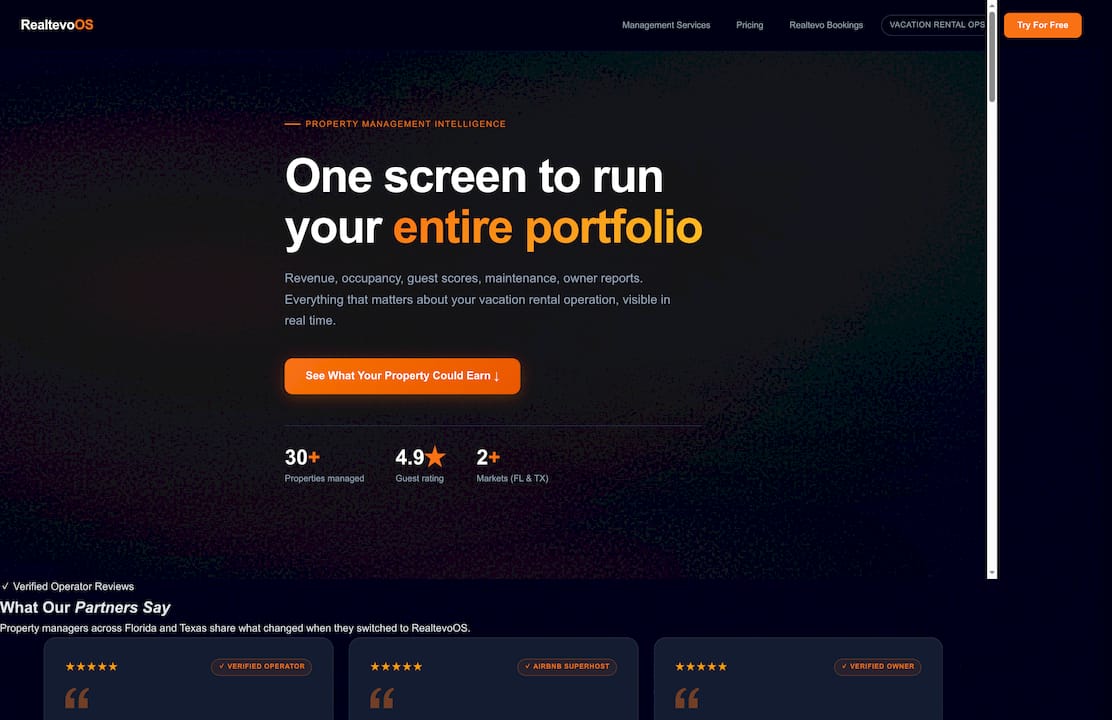
The platform pulls live data from Airbnb and Vrbo into a single dashboard, automates guest communication with escalation rules, and generates maintenance tickets without manual input. Property managers using Realtevoos report saving several hours each week on reporting alone. The Realtevoos command center gives you the kind of portfolio visibility that used to require a full operations team. If you manage vacation rentals and want AI that works across your entire workflow, not just one part of it, Realtevoos is worth a close look. You can also review secure booking data workflows to understand how compliant data management supports the AI tools you deploy.
FAQ
What are the most common examples of AI in property management?
The most common applications are automated guest communication, predictive maintenance, dynamic pricing, and AI-generated reporting. These four areas deliver the clearest and most measurable returns for vacation rental operators.
Why use AI for rental workflow automation?
AI connects your PMS, calendars, vendors, and communication channels into one coordinated system. Integrated AI systems drive operational efficiency gains of 25–40% compared to managing those tools separately.
How does AI improve maintenance in vacation rentals?
AI analyzes sensor data and maintenance history to flag equipment failures before they occur. On one 142-property portfolio, this cut maintenance response time from 5.8 hours to 23 minutes and saved an estimated $156,000 annually.
Does dynamic pricing AI actually increase revenue?
Dynamic pricing models that analyze 47 variables and update rates weekly increase revenue per unit by 12% compared to static pricing methods. The speed of weekly updates is what separates AI pricing from traditional monthly rate reviews.
What should I do before deploying AI tools for my rental portfolio?
Standardize and clean your property data first. Consistent naming conventions, digitized maintenance logs, and structured booking records are required for AI to produce accurate outputs. Poor data leads directly to poor AI recommendations.