Vacation Rental Hurricane Preparedness: An Operator's Checklist
A vacation rental hurricane preparedness checklist for property managers: property prep, storm kits, watches and warnings, guest messages and recovery.
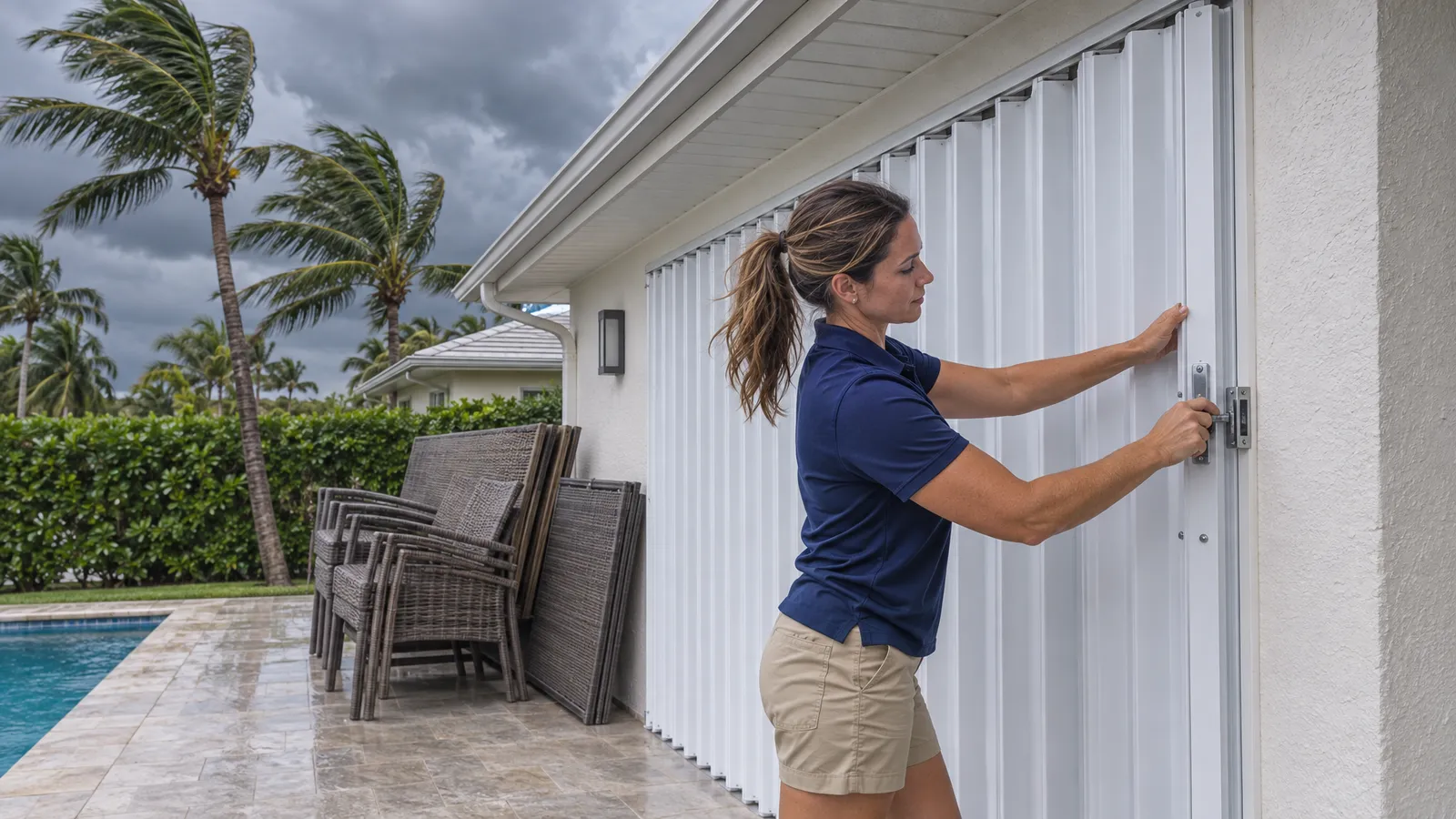
Vacation rental hurricane preparedness means getting each property, guest and crew ready before the season, tying clear actions to every watch and warning, and running a documented recovery afterward. Guests don't know the area and owners aren't on site, so the plan has to be written down and ready before a storm forms.
Key Takeaways
A hurricane plan for rentals works when property prep, guest messages and post-storm checks are written down and tied to official alerts.
| Point | Details |
|---|---|
| Prepare before June 1 | Shutters, trees, drains, kits and policies should be done before the Atlantic season opens. |
| Know each property's zone | Record the evacuation zone for every address and share it with guests. |
| Link actions to alerts | A watch starts prep and guest outreach; by a warning, preparations should be complete. |
| Follow official orders | Guests leave when officials order evacuation; booking questions come afterward. |
| Document everything | Photos before and after the storm support claims and owner reports. |
Table of Contents
- Why Do Vacation Rentals Need Their Own Hurricane Plan?
- When Should You Start Preparing for Hurricane Season?
- How Do You Prepare Each Property Before a Storm?
- What Should Each Property Keep on Hand?
- What Do Hurricane Watches and Warnings Mean for Your Bookings?
- How Should You Communicate With Guests Before and During a Storm?
- What Should Your Team Do After the Storm Passes?
- Vacation Rental Hurricane Preparedness Checklist
- What Operators Get Wrong About Hurricane Preparedness
- How RealtevoOS Handles Hurricane Operations
- Frequently Asked Questions About Vacation Rental Hurricane Preparedness
- Sources
Why Do Vacation Rentals Need Their Own Hurricane Plan?
A vacation rental needs its own hurricane plan because the people inside it are visitors who don't know the area, the evacuation routes or the house, and the owner usually isn't there to make decisions.
Hurricanes bring more than wind. Ready.gov lists storm surges, wind damage, rip currents and flooding among the dangers, and notes that storm surge has historically been the leading cause of hurricane-related deaths in the United States (Ready.gov — Hurricanes).
- Guests don't know the local risk — a family from out of state may not know the home sits in an evacuation zone or that a nearby road floods.
- Owners expect answers — owners want to know what was done to protect the home and what happened afterward.
When Should You Start Preparing for Hurricane Season?
Start before the season opens, because the National Weather Service says the best time to prepare is before hurricane season begins on June 1 (National Weather Service — What to Do Before the Tropical Storm or Hurricane).
The Atlantic hurricane season runs from June 1 to November 30, and based on the 1991–2020 climate period an average season has 14 named storms, 7 hurricanes and 3 major hurricanes (NOAA National Hurricane Center — Tropical Cyclone Climatology). The NHC also notes the first hurricane tends to form in early to mid-August and the first major hurricane in late August or early September, though individual seasons vary.
- Off-season — review last season's incidents, update the plan, book shutter and tree work, and confirm vendor contacts.
- Before June 1 — stock supplies, check shutters and generators, and update guest-facing storm information.
How Do You Prepare Each Property Before a Storm?
Prepare each property by reducing wind and water damage in advance and writing down exactly what your crew must do when a storm is forecast.
- Secure the outside — the American Red Cross advises securing items such as lawn furniture and trash cans that high winds could pick up, anchoring objects that are unsafe to bring inside such as gas grills and propane tanks, and trimming or removing trees close enough to fall on the home (American Red Cross — Hurricane Safety).
- Protect openings — the Red Cross recommends permanent storm shutters or pre-cut plywood for windows; Ready.gov also suggests considering hurricane shutters.
- Prepare for flooding — clean out drains, gutters and downspouts, stock plastic sheeting and sandbags, and consider a sump pump with battery backup, per the Red Cross.
- Know the property's zone — the Florida Division of Emergency Management's Know Your Zone tool shows whether an address falls in an evacuation zone; Zone A is typically the most vulnerable and most likely to evacuate first (Florida Division of Emergency Management — Know Your Zone, Know Your Home). Other states have their own local zone tools.
- Document the property — FloodSmart recommends taking photos and videos of major household items and valuables and storing them safely, because they matter when filing claims (FloodSmart.gov (NFIP)).
- Review coverage with owners — FloodSmart notes that most homeowners insurance does not cover flood damage, so ask each owner to confirm their coverage with their agent.
What Should Each Property Keep on Hand?
Each property should have a basic storm kit in a known spot so guests who shelter in place and crews who arrive afterward have what they need.
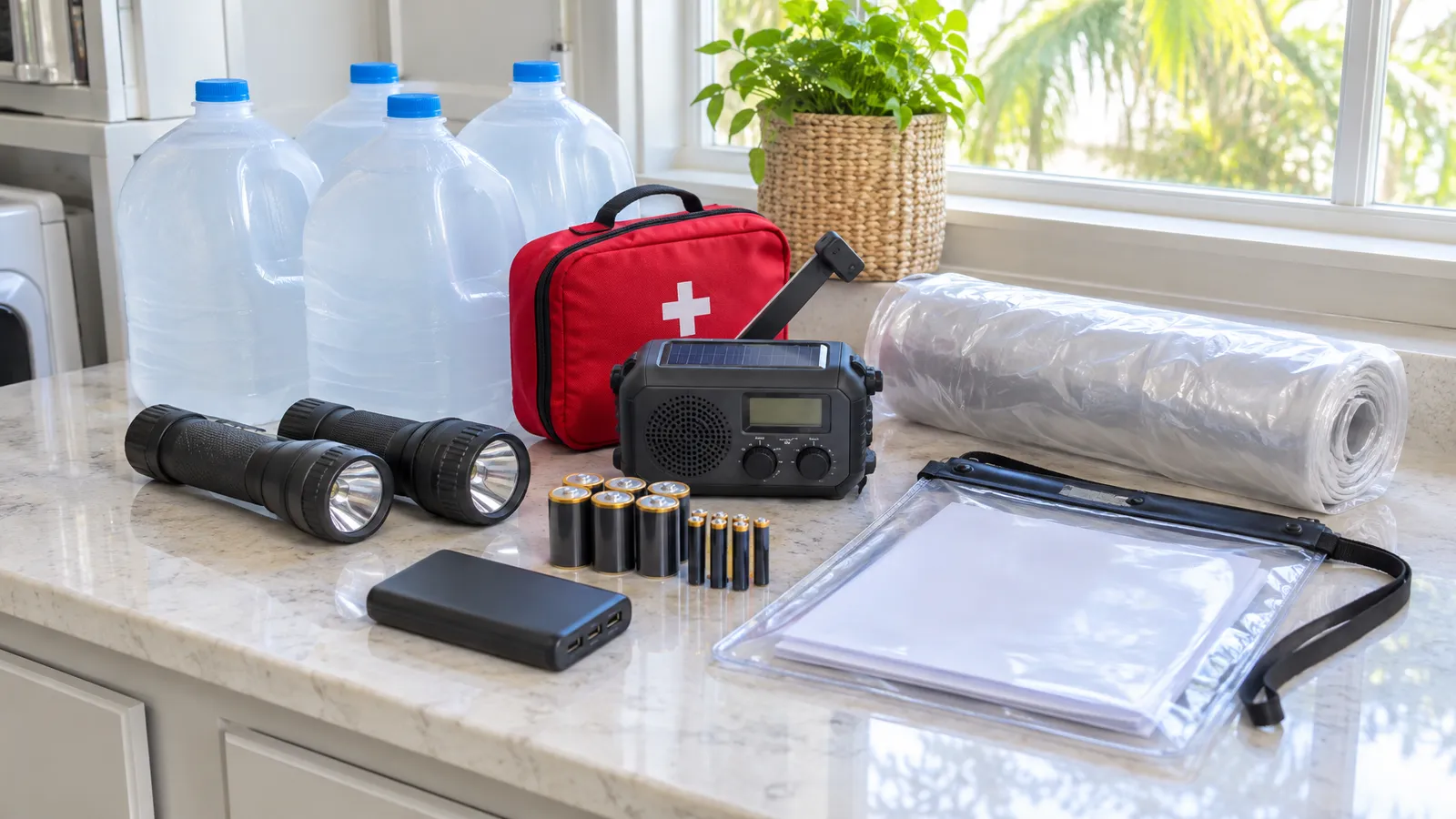
- Water, light and power — the Red Cross advises being ready to live without power, water, gas, phone and internet for a long time; stock water, flashlights, spare batteries and a way to charge phones.
- A battery-powered radio — the Red Cross lists one as part of staying connected.
- First aid kit and plastic sheeting — keep both stocked and easy to find.
- A printed storm sheet — the address, evacuation zone, nearest shelter information source, your 24/7 contact and the main breaker and water shut-off locations.
The Red Cross suggests households keep a 3-day go-kit and a 2-week stay-at-home kit. Focus the property kit on the house itself and tie it into your vacation rental power outage plan.
What Do Hurricane Watches and Warnings Mean for Your Bookings?
A watch means hurricane conditions are possible and is your signal to start property prep and guest outreach; a warning means they're expected and preparations should already be finished.
- Hurricane watch — the National Weather Service says hurricane conditions (sustained winds of 74 mph or greater) are possible, and the NHC issues hurricane watches 48 hours before it anticipates tropical storm-force winds (National Weather Service — Hurricane and Tropical Storm Watches and Warnings).
- Hurricane warning — hurricane conditions are expected; the NHC issues it 36 hours before tropical storm-force winds so there is time to complete preparations, and the NWS says all preparations should be complete.
- Storm surge warning — danger of life-threatening inundation from rising water moving inland, generally within 36 hours; check for local evacuation orders.
Tie each alert level to specific actions so nobody has to decide from scratch:
- Watch issued — message in-house and arriving guests, confirm crew availability, and start exterior prep at exposed properties.
- Warning issued — finish shutters and outdoor items, confirm every guest's plan, and pause new same-area arrivals if your policy allows.
- Evacuation order — tell affected guests to leave right away and give them the official source to follow.
- Storm passes — switch to the after-storm checklist below.
How Should You Communicate With Guests Before and During a Storm?
Communicate early, briefly and with links to official sources, so guests act on local officials' instructions rather than on your best guess.
- Point to officials — Ready.gov says to follow the instructions of local emergency managers and to evacuate immediately if you're in a mandatory evacuation zone and told to leave (Ready.gov — Hurricanes).
- Encourage alerts — Ready.gov recommends several ways to receive alerts, including signing up for community alerts and knowing about Wireless Emergency Alerts, which need no sign-up.
- Share the shelter-in-place basics — if guests are not ordered to leave, the Red Cross says the next best protection after a designated shelter is a small, interior, windowless room on the lowest level that isn't likely to flood.
- Warn about floodwater — Ready.gov warns that just six inches of fast-moving water can knock you down and one foot of moving water can sweep a vehicle away.
- Set the booking policy in advance — decide how you handle stays cut short or cancelled by a mandatory evacuation order, check each booking channel's own policy, and agree with owners who decides on refunds.
A unified guest inbox makes this manageable: in RealtevoOS, storm messages for every property sit in one inbox, and AI guest messaging can answer routine questions from your SOPs while urgent ones go to your team.
What Should Your Team Do After the Storm Passes?
After the storm, your team should return only when officials say it's safe, inspect from the outside first, and document everything before cleanup starts.
- Wait for local officials to say it's safe to return; the NWS advises avoiding flooded roads and washed-out bridges (National Weather Service — After a Hurricane).
- Walk the outside of the property to check for loose power lines, gas leaks and structural damage; stay out if you smell gas or floodwater surrounds the building.
- Never run a portable generator inside the home or garage; the NWS says carbon monoxide poisoning is one of the leading causes of death after storms in areas with power outages.
- Use flashlights, not candles (NWS), and don't touch electrical equipment that is wet or while standing in water (Ready.gov).
- Photograph all damage before cleanup and contact the insurer; Ready.gov advises documenting property damage with photographs.
- Log every issue as a maintenance task, assign vendors, and update upcoming guests on the property's status.
- Send the owner a written summary with photos.
Remote sensors help you know what happened before anyone can get there; see our remote property monitoring setup guide.
Vacation Rental Hurricane Preparedness Checklist
Use this checklist to set up each property once, then review it before every season.
- Look up each property's evacuation zone and record it in the property file.
- Confirm shutters or pre-cut plywood, and assign who installs them.
- Schedule tree trimming and drain and gutter cleaning before the season.
- List every outdoor item to secure or anchor, property by property.
- Stock the property storm kit and the printed storm sheet.
- Photograph and video each property's contents and condition for the record.
- Ask owners to confirm insurance and flood coverage with their agent.
- Write the evacuation and cancellation policy and add it to listing terms.
- Prepare watch, warning, evacuation and all-clear message templates.
- Assign an on-call lead and a backup for each market.
Your hurricane plan belongs inside your broader vacation rental emergency response plan, using the same contact tree and escalation rules.
What Operators Get Wrong About Hurricane Preparedness
Most mistakes come from treating a hurricane as one event on one day instead of a sequence of decisions that starts days before landfall.
- Assuming inland means safe — Ready.gov stresses that hurricanes are not just a coastal problem: rain, wind, water and even tornadoes can happen far inland from where a storm makes landfall.
- Skipping the annual review — the NWS checklist includes checking emergency equipment such as flashlights, generators and storm shutters and reviewing insurance policies before the season.
- Waiting for a warning — by the time a warning is issued, the NWS expects preparations to be complete.
- No photos — without before-and-after documentation, claims and owner conversations get much harder.
How RealtevoOS Handles Hurricane Operations
RealtevoOS doesn't forecast storms or replace local emergency officials, but it keeps guest communication, crew tasks and owner updates organized while a storm moves through your markets. It was built by an operator running a real Florida portfolio, where hurricane season is part of the job.
- Unified guest inbox and 24/7 AI guest messaging — answer storm questions from every property in one place at any hour and send urgent ones to your team.
- AI that learns your SOPs — teach it your storm policy, evacuation guidance and property details so answers stay consistent.
- Crew coordination — assign shutter, outdoor-item and inspection tasks across properties.
- Maintenance tracking — log every storm-related repair per property until it's closed.
- Owner reports — give owners a clear record of what was done before and after the storm.
Frequently Asked Questions About Vacation Rental Hurricane Preparedness
When should vacation rental managers prepare for hurricane season?
Before it starts. The National Weather Service says the best time to prepare is before hurricane season begins on June 1, and the Atlantic season runs through November 30.
Should vacation rental guests evacuate during a hurricane?
If local officials order an evacuation for the property's area, guests should leave immediately. Florida's Division of Emergency Management says people in an ordered evacuation zone, a low-lying flood area or a mobile home should follow all evacuation orders.
What is the difference between a hurricane watch and a hurricane warning?
A hurricane watch means hurricane conditions are possible and is issued 48 hours before tropical storm-force winds are expected. A warning means they are expected and is issued 36 hours before; preparations should be complete.
Does homeowners insurance cover hurricane flood damage at a rental?
Often not. FloodSmart, the National Flood Insurance Program site, says most homeowners insurance does not cover flood damage. Owners should confirm their own coverage with an insurance agent.
What should a property manager do after a hurricane?
Return only when officials say it's safe, check the outside for downed lines, gas leaks and structural damage, never run a generator indoors, photograph all damage, contact the insurer and update owners and upcoming guests.
Sources
- Ready.gov — Hurricanes
- American Red Cross — Hurricane Safety
- National Weather Service — Hurricane and Tropical Storm Watches, Warnings, Advisories and Outlooks
- National Weather Service — After a Hurricane
- NOAA National Hurricane Center — Tropical Cyclone Climatology
- National Weather Service — What to Do Before the Tropical Storm or Hurricane
- Florida Division of Emergency Management — Know Your Zone, Know Your Home
- FloodSmart.gov — National Flood Insurance Program