Vacation Rental Pool Safety: A Checklist for Property Managers
A vacation rental pool safety checklist: four-sided fencing, self-latching gates, drain covers, guest pool rules and turnover checks for property managers.
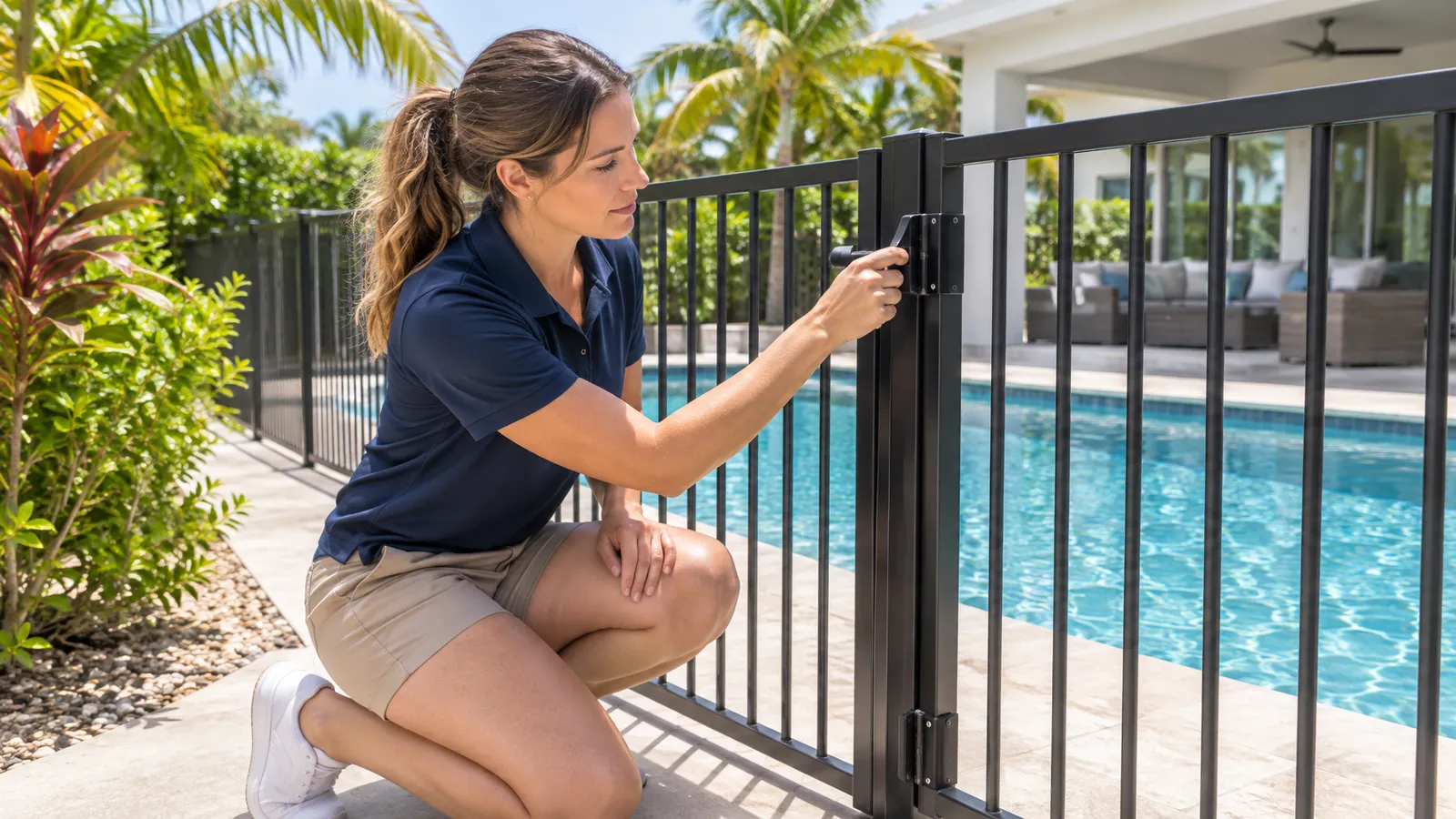
Vacation rental pool safety comes down to layers: a fully enclosed pool with a self-latching gate, a second barrier, compliant drain covers, clear rules for guests and a documented check at every turnover. Every guest is new to the property, so those layers must work without you at the gate.
Key Takeaways
A rental pool is safe when barriers, rules and turnover checks are layered and written down, not left to each guest to figure out.
| Point | Details |
|---|---|
| Fence all four sides | Four-sided isolation fencing with a self-closing, self-latching gate is the core barrier. |
| Add a second layer | Door alarms, out-of-reach locks or a lockable cover back up the fence. |
| Prevent entrapment | Use compliant anti-entrapment drain covers and inspect them regularly. |
| Make rules impossible to miss | Repeat short pool rules before arrival, at check-in and at the pool. |
| Check every turnover | Test the gate, alarms, covers and equipment and keep photo records. |
Table of Contents
- Why Is Pool Safety Different at a Vacation Rental?
- What Barriers Should a Rental Pool Have?
- How Do You Protect Guests From Drain Entrapment?
- What Pool Rules Should You Give Guests?
- How Should You Communicate Pool Safety to Guests?
- What Should Happen in a Pool Emergency?
- What Should Your Team Check at Every Turnover?
- Vacation Rental Pool Safety Checklist
- What Operators Get Wrong About Pool Safety
- How RealtevoOS Handles Pool Safety Operations
- Frequently Asked Questions About Vacation Rental Pool Safety
- Sources
Why Is Pool Safety Different at a Vacation Rental?
Pool safety is harder at a vacation rental because every stay brings new people who don't know the layout, the gate, the depth or the equipment, and you aren't there to supervise.
The stakes are real. The American Red Cross estimates that about 4,000 people die from unintentional drowning in the United States each year, and that drowning is the number one cause of death for children ages 1 to 4 (American Red Cross — Drowning Prevention & Facts). The same page reports that for children younger than 5, 87% of drowning fatalities happen in home pools or hot tubs, and most take place in pools owned by family, friends or relatives — exactly the kind of private pool a family finds at a rental.
- Unfamiliar property — guests don't know which door opens onto the deck, how the gate latches or where the deep end starts.
- Vacation mindset — relaxed, distracted groups are when supervision slips.
- No owner on site — if a latch breaks on day two, nobody notices unless a process catches it.
What Barriers Should a Rental Pool Have?
A rental pool should be fully enclosed by a four-sided fence with a self-closing, self-latching gate, backed up by a second layer such as door alarms or a lockable cover.
- Four-sided isolation fencing — the Red Cross recommends completely surrounding the pool with four-sided isolation fencing and says this reduces a child's risk of drowning 83% compared to three-sided property-line fencing (American Red Cross — Home Pool & Hot Tub Safety).
- Fence specifications — the American Academy of Pediatrics says the fence should be at least 4 feet high, have no openings under it or between slats more than 4 inches wide, and completely separate the pool from the home and the rest of the yard (HealthyChildren.org (AAP) — Drowning Prevention for Curious Toddlers).
- Gate hardware — the AAP recommends a self-closing and self-latching gate that opens away from the pool, with the latch at least 54 inches from the ground.
- Secondary barriers — the Red Cross suggests door alarms and locks out of a child's reach on all doors and windows with direct access to the pool or spa area, plus lockable covers.
- Above-ground pools — secure, lock or remove steps and ladders when the pool isn't supervised, per the Red Cross.
Fencing works. The AAP cites research suggesting fencing can prevent more than half of all swimming pool drownings of young children, and the World Health Organization lists fencing swimming pools among the measures that greatly reduce exposure to water hazards (WHO — Drowning fact sheet). Local building and health codes may add their own barrier or permit requirements, so confirm the rules with your local authority for every market you operate in.
How Do You Protect Guests From Drain Entrapment?
Use compliant anti-entrapment drain covers, add a safety release system where the drain setup calls for one, and inspect covers so a cracked or missing one is never in use.
- Compliant covers — under 15 U.S.C. 8003, pool and spa drain covers manufactured, distributed or entered into commerce in the United States must conform to the ASME/ANSI A112.19.8 entrapment protection standard or a successor standard (15 U.S.C. § 8003 — Federal swimming pool and spa drain cover standard).
- Safety release systems — the Red Cross recommends anti-entrapment drain covers and safety release systems to protect against drain entrapment.
- Know whether public-pool rules apply — the same statute applies extra equipment requirements to a "public pool and spa", a definition that includes pools open exclusively to patrons of a hotel or other public accommodations facility. Ask a qualified pool professional or attorney how that applies to your properties.
- Teach guests the rule — the Red Cross lists "stay away from drains and other openings that cause suction" among basic pool rules.
What Pool Rules Should You Give Guests?
Give guests a short, specific list of pool rules that covers supervision, access, alcohol, diving and drains, and put it where they'll see it.
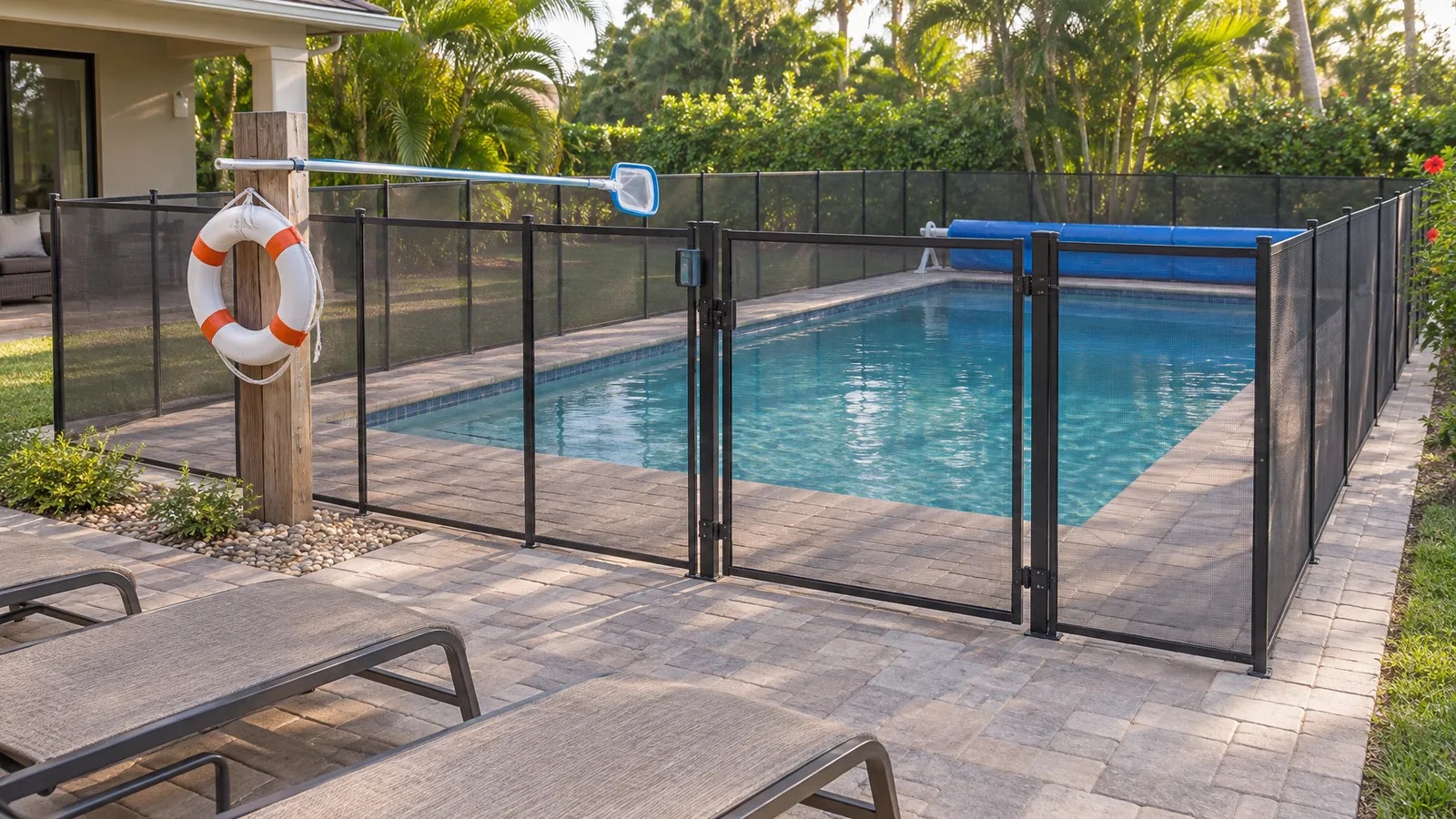
- Always supervise children — the Red Cross recommends designating a water watcher and staying within arm's reach of young children (American Red Cross — Home Pool & Hot Tub Safety).
- Keep the gate closed — the AAP advises keeping the gate locked at all times and checking that it works properly.
- No swimming alone — MedlinePlus advises not swimming alone or in bad weather (MedlinePlus — Water Safety (Recreational)).
- Swim and supervise sober — both the Red Cross and MedlinePlus advise avoiding alcohol around the water.
- No diving unless marked safe — the Red Cross says not to enter head first unless the pool has a safe diving area.
- Cover and lock the spa — the AAP says to cover and lock hot tubs, spas and whirlpools right after use.
Add these rules to your vacation rental house rules so they're agreed before arrival, not discovered at the gate.
How Should You Communicate Pool Safety to Guests?
Tell guests about the pool's safety features before arrival, again at check-in, and on a sign at the pool, using plain, specific language.
- Before booking is confirmed — state that the pool is fenced, whether it is heated, whether there is a lifeguard (there usually isn't) and that children must be supervised.
- Pre-arrival message — share the pool rules and ask whether young children or non-swimmers are coming.
- Check-in message — explain the gate latch, where the cover and safety equipment are, and the emergency number.
- At the pool — post the rules and the property address.
- During the stay — send maintenance quickly if a gate, alarm or cover is reported broken.
This is where a unified guest inbox helps: in RealtevoOS, pool questions from every property land in one place, and AI guest messaging answers routine ones from your SOPs while flagging safety issues to your team.
What Should Happen in a Pool Emergency?
Guests should call the local emergency number immediately, get the person out of the water only if it's safe to do so, and start CPR if they are trained; your team's job is to support and document, not to direct the medical response.
- Check the water first — the Red Cross advises that if a child is missing, check the water first (American Red Cross — Home Pool & Hot Tub Safety).
- Know how to respond — the Red Cross recommends knowing how to help someone in trouble in the water safely, call for emergency help and perform CPR; the AAP says parents, caregivers and older children should learn CPR and safe rescue techniques.
- Keep basic equipment visible — a reaching pole or ring buoy near the pool helps guests act fast.
- Escalate internally — have a clear path for an on-call manager to reach the owner and log what happened.
Pool incidents belong in your vacation rental emergency response plan alongside fire, weather and medical scenarios, with the same contact tree. Encourage your own field staff to take a Red Cross CPR class.
What Should Your Team Check at Every Turnover?
Every turnover should include a short, documented pool safety check, because barriers and equipment fail between stays without anyone noticing.
- Open the gate and let it go: it must close and latch on its own every time.
- Walk the fence line for gaps, loose panels and furniture or planters someone could climb.
- Test door and window alarms that face the pool area.
- Check that drain covers are in place, secure and undamaged; report anything cracked immediately.
- Confirm the pool cover and spa cover close and lock.
- Confirm rescue equipment, posted rules and the address sign are in place.
- Remove toys from the pool area (the AAP notes they tempt children through the fence) and store above-ground pool ladders.
- Photograph the gate, cover and drain area for the turnover record.
If the property has a spa, follow the companion steps in our vacation rental hot tub maintenance checklist.
Vacation Rental Pool Safety Checklist
Use this checklist to set up each pool property once and then review it before every season.
- Confirm the pool is fully enclosed by four-sided fencing with a self-closing, self-latching gate.
- Add at least one secondary barrier: door alarms, locks out of a child's reach or a lockable cover.
- Verify drain covers meet the federal standard and that any required safety release system is installed and serviced.
- Write pool rules into the house rules, listing description, pre-arrival and check-in messages.
- Post rules, the property address and the local emergency number at the pool.
- Add the pool check to every turnover task list with photo proof.
- Include pool incidents in your emergency plan and on-call escalation path.
What Operators Get Wrong About Pool Safety
Most pool safety gaps come from assuming that a fence, a sign or a lifeguard-free disclaimer is enough on its own.
- Relying on one layer — the AAP recommends multiple layers of protection because no single method can prevent all drowning.
- Three-sided fencing — a yard fence that uses the house as the fourth side leaves every patio door as an open path to the water.
- Propped-open gates — a gate held open by a chair defeats the self-closing hardware; check it at every turnover.
- Inflatable floats as safety gear — the AAP warns that floaties, water wings and inflatable toys can deflate and do not prevent drowning.
- No record — without photos and checklists, you can't show an owner or insurer what was inspected and when.
How RealtevoOS Handles Pool Safety Operations
RealtevoOS doesn't install fences, test water or replace a licensed pool professional, but it keeps the communication, tasks and records behind pool safety organized across your portfolio.
- Unified guest inbox and 24/7 AI guest messaging — answer pool questions from every property in one inbox at any hour, and route reports of broken gates or covers to your team.
- AI that learns your SOPs — teach it each property's pool rules, gate instructions and emergency details so answers stay accurate.
- Maintenance tracking — log gate, alarm, cover and drain cover issues per property so nothing is left open.
- Crew coordination — put the pool safety check on every turnover task list.
- Owner reports — show owners what was inspected and what was fixed.
Safety still depends on physical barriers and supervision at the property; RealtevoOS helps make sure the checks and follow-ups actually happen.
Frequently Asked Questions About Vacation Rental Pool Safety
What safety features should a vacation rental pool have?
At minimum, four-sided isolation fencing with a self-closing, self-latching gate, a secondary barrier such as door alarms or a lockable cover, compliant anti-entrapment drain covers, posted rules and visible rescue equipment. Check local codes for any additional requirements.
How high should a pool fence be at a rental property?
The American Academy of Pediatrics recommends a pool fence at least 4 feet high with no openings under it or between slats more than 4 inches wide, and a self-closing, self-latching gate with the latch at least 54 inches from the ground.
Do vacation rental pools need anti-entrapment drain covers?
Federal law (15 U.S.C. 8003) requires pool and spa drain covers sold in the United States to meet the ASME/ANSI A112.19.8 entrapment protection standard, and the Red Cross recommends anti-entrapment covers and safety release systems for home pools. Ask a qualified professional whether additional public-pool rules apply to your property.
Should a vacation rental provide a lifeguard?
Most private rentals don't, so say so clearly before arrival and make adult supervision a written house rule. The Red Cross recommends designating a water watcher and staying within arm's reach of young children.
How often should a rental pool's safety features be checked?
Check the gate, fence, alarms, covers, drain covers and safety equipment at every turnover, and document it with photos. Barriers can fail between stays without anyone noticing.
Sources
- American Red Cross — Home Pool & Hot Tub Safety
- American Red Cross — Drowning Prevention & Facts
- HealthyChildren.org (American Academy of Pediatrics) — Drowning Prevention for Curious Toddlers
- World Health Organization — Drowning fact sheet
- Cornell LII — 15 U.S.C. § 8003, Federal swimming pool and spa drain cover standard
- MedlinePlus — Water Safety (Recreational)
- American Red Cross — CPR Training