Workflow Integration in Property Tech: 2026 Guide
Discover what is workflow integration in property tech and how it boosts efficiency, reduces errors, and enhances returns for property managers.

Workflow Integration in Property Tech: 2026 Guide
Workflow integration in property tech is defined as the real-time, bidirectional connection of siloed property management systems into a single automated operational layer. This technology layer coordinates leasing, asset management, vendor compliance, and guest communications across platforms without manual intervention. Property owners and managers who understand what is workflow integration in property tech gain a direct path to higher efficiency, fewer errors, and measurably better returns. Vertically integrated firms achieve 100–300 basis points of excess returns and stronger NOI margins compared to operators running disconnected systems. That gap is not a coincidence. It is the direct result of connected workflows replacing fragmented, manual processes.
What is workflow integration in property tech?
Workflow integration in property tech is the practice of connecting separate software systems so that data flows automatically between them based on real events. The industry term for this architecture is event-driven integration. When a guest books a vacation rental on Airbnb or Vrbo, an event-driven system triggers automatic updates across the calendar, pricing engine, housekeeping schedule, and guest messaging platform simultaneously. No one enters data twice. No step gets missed.
True workflow integration requires bidirectional, real-time data syncing with event-based triggers capable of managing complex edge cases like mid-lease changes or unit transfers without human intervention. That definition matters because most property managers encounter vendors who claim integration but deliver far less. A shared spreadsheet export is not integration. A nightly data batch is not integration. Real integration means the systems talk to each other instantly and continuously.

The operational areas most affected by property technology workflow include leasing and booking management, maintenance scheduling, financial reporting, and regulatory compliance. When these functions connect through a shared data layer, property managers stop spending hours reconciling records and start making decisions based on live information. That shift from reactive to proactive management is the core benefit of understanding property tech workflows.
What integration levels exist, and why does depth matter?
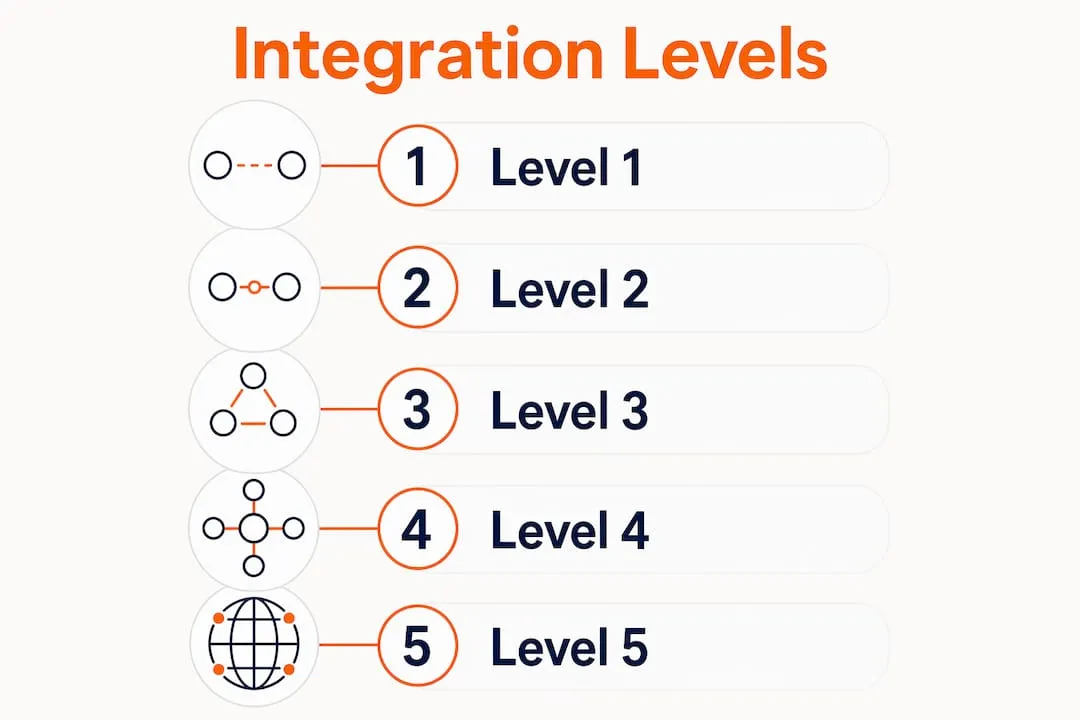
Integration depth in property tech runs across five distinct levels, and the gap between Level 1 and Level 5 is the difference between a marketing claim and a functional system.
Level 1 is logo presence. A vendor lists a partner’s logo on their website, but no actual data connection exists. Level 2 is one-way data export, typically a CSV or PDF report generated on demand. Level 3 is scheduled sync, where data transfers on a fixed schedule such as every 24 hours. Level 4 is one-way real-time push, where one system sends updates to another when an event occurs. Level 5 is deep, bidirectional, real-time sync with error recovery and edge case handling.
| Integration level | Description | Operator impact |
|---|---|---|
| Level 1: Logo presence | No data connection exists | Zero operational benefit |
| Level 2: Manual export | On-demand data file transfer | High manual effort, frequent errors |
| Level 3: Scheduled sync | Batch updates on a fixed schedule | Lag causes booking conflicts and stale data |
| Level 4: One-way real-time push | One system pushes updates on events | Partial automation, gaps in complex scenarios |
| Level 5: Bidirectional real-time sync | Full two-way sync with error recovery | Autonomous workflows, minimal manual intervention |
Most current offerings fall short of Level 5, causing manual workarounds and failures in complex tasks like unit transfers. That shortfall forces property managers to act as human middleware, manually copying data between systems and fixing errors that a proper integration would prevent automatically.
Pro Tip: Ask vendors three specific questions to verify integration depth: Does data sync in both directions? How does the system handle a failed sync event? Can it manage mid-stay reservation changes without manual steps? Vendors who cannot answer these questions concretely are likely operating at Level 2 or Level 3.
How does workflow integration reduce manual tasks and save time?
Automating routine tasks through workflow integration produces measurable time savings. Transaction file creation alone can save 30–60 minutes per transaction when automated. Across a portfolio of 20 properties with daily bookings, that adds up to hours recovered every week.
The efficiency gains extend beyond speed. Manual data entry introduces errors that compound over time. A wrong check-in date entered once can trigger a double booking, a failed housekeeping assignment, and an incorrect financial record simultaneously. Automated workflows eliminate that chain reaction by making the original data entry the only entry.
Workflow automation in real estate also reduces compliance risk. Vendor certifications, insurance records, and maintenance logs that expire or go missing create legal exposure. An integrated system flags expiring documents automatically and routes renewal requests without a manager needing to track each vendor manually.
Tasks that property technology workflow typically handles without human input include:
- Guest booking confirmation and pre-arrival messaging
- Calendar synchronization across listing platforms
- Housekeeping and maintenance task assignment after checkout
- Invoice generation and payment tracking
- Regulatory document expiration alerts
- Financial report generation across multiple properties
Pro Tip: Map your existing workflows completely before activating any automation. Automation accelerates flawed processes. A broken check-in workflow that runs manually once a day becomes a broken workflow that runs automatically 50 times a day.
Why does integration depth matter for AI and future-proofing?
Deep workflow integration is the foundation that makes AI useful in property management. Without a shared data layer and real-time sync, AI tools remain isolated and cannot drive core operations. AI agents require integrated workflows to execute autonomous tasks across the property management lifecycle. A disconnected AI tool can generate a report, but it cannot act on that report, update a booking, and notify a guest automatically. Only a deeply integrated system enables that chain.
The back office is where AI will deliver its greatest impact in real estate. Firms that lack a shared data layer and architecture for autonomous workflows risk stalling AI adoption entirely. Integration is not a feature. It is the prerequisite.
Agentic AI amplifies the value of integrated workflows by operating inside them to assist decision-making and automate routine tasks in real time. That transition from peripheral tool to core operational component only happens when the underlying integration is deep enough to support it.
The hallmarks of an AI-ready integration infrastructure include:
- Bidirectional, real-time data sync across all connected systems
- Event-driven triggers that fire on booking, cancellation, maintenance request, and payment events
- Automatic error recovery when a sync fails, without requiring manual intervention
- A centralized data layer that every connected tool reads from and writes to
- Audit logs that track every data change for compliance and debugging
Disconnected point solutions will decline as the industry moves toward platforms that embed technology invisibly into workflows. Property managers who build their tech stacks around shallow integrations today will face expensive migrations when those point solutions lose market relevance.
How do you assess and implement effective workflow integration?
Property management process optimization starts with an honest audit of your current tech stack. List every tool you use, identify where data moves between them, and mark every step that requires a human to copy, paste, or re-enter information. Each of those steps is a failure point and an automation opportunity.
Vendor evaluation is the next critical step. Certified partner status with property management system providers signals greater integration depth and more reliable error recovery. A vendor with certified status has passed technical validation from the platform they connect to. That is a stronger signal than a logo on a website.
Real estate technology solutions that support genuine integration also come with defined service level agreements for uptime and sync reliability. Ask vendors for their SLA documentation before signing. A vendor who cannot provide one is telling you something important about how seriously they treat integration quality.
Best practices for a successful integration project:
- Audit your current workflows and document every manual data transfer step
- Prioritize integrations that affect guest-facing processes first, since errors there damage reviews
- Require vendors to demonstrate live integration in a test environment, not just a slide deck
- Confirm that the integration handles your most complex scenarios, such as last-minute cancellations or multi-property bookings
- Set up monitoring alerts so you know immediately when a sync fails
- Review data integration practices specific to rental management before selecting a platform
The goal of property workflow integration is not to automate everything at once. Start with the highest-volume, most error-prone processes and build from there. Each successful automation creates capacity to tackle the next one.
Key Takeaways
Workflow integration in property tech is the foundational layer that connects systems, eliminates manual data entry, and enables AI to operate as a core part of daily property management.
| Point | Details |
|---|---|
| Integration depth determines value | Level 5 bidirectional sync delivers autonomous workflows; lower levels create manual workarounds. |
| Time savings are measurable | Automating transaction tasks saves 30–60 minutes per transaction across your portfolio. |
| AI requires deep integration | AI agents cannot drive operations without a shared data layer and real-time sync in place. |
| Map workflows before automating | Automating a broken process accelerates errors. Audit first, then automate. |
| Certified vendors signal reliability | Certified partner status with PMS providers indicates greater integration depth and error recovery. |
The integration gap no one talks about
Property managers ask me constantly whether they should add another tool to their stack. My honest answer is almost always: fix your integrations first. The industry has spent years adding point solutions, each solving one problem while creating two new ones at the connection points. I have watched operators run five platforms that technically “integrate” and still spend three hours a day reconciling data manually. That is not integration. That is expensive chaos with a marketing label on it.
The shift I find genuinely significant is the move toward platforms where the technology disappears into the workflow. You stop thinking about the software and start thinking about the outcome. That only happens at Level 5 integration, and most vendors are not there yet. The ones who are will not hesitate to show you a live demo of a complex edge case. The ones who are not will show you a slide deck.
AI is accelerating this divide. Property managers who build on deeply integrated platforms today will be able to deploy AI agents that handle bookings, maintenance routing, and guest communications without adding headcount. Those running fragmented stacks will spend their AI budget on tools that cannot connect to anything meaningful. The gap between those two groups will widen fast. I would rather see you on the right side of it. Explore AI in property management to understand what that looks like in practice for vacation rental operators.
— Jose Villeda
Realtevoos: built for real workflow integration
Realtevoos is a SaaS platform built specifically for vacation rental property managers who need genuine workflow integration, not a collection of loosely connected tools.
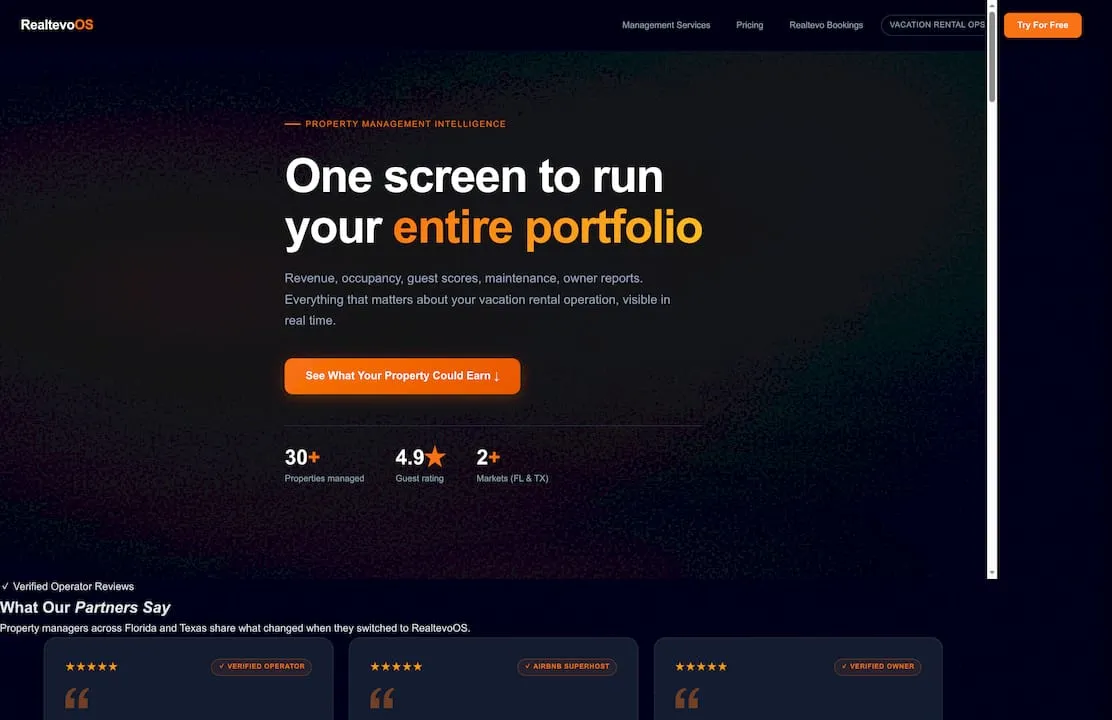
Realtevoos consolidates operational workflows across multiple properties into a single dashboard, pulling real-time data from Airbnb, Vrbo, and other platforms to keep every system in sync automatically. Property managers using Realtevoos report saving several hours each week by eliminating manual reporting and fragmented data entry. The platform’s AI-driven automation handles guest communications, financial reporting, and maintenance coordination without requiring manual triggers. For operators ready to build a tech stack that actually works together, Realtevoos is the command center designed for that purpose.
FAQ
What is workflow integration in property tech?
Workflow integration in property tech is the real-time, bidirectional connection of property management systems so that data flows automatically between them based on operational events. It eliminates manual data entry and enables automated coordination across leasing, maintenance, and guest communications.
What is the difference between Level 3 and Level 5 integration?
Level 3 integration syncs data on a fixed schedule, creating lag and stale records. Level 5 integration syncs bidirectionally in real time with automatic error recovery, enabling fully autonomous workflows without human intervention.
How much time can workflow automation save property managers?
Automating routine tasks like transaction file creation saves 30–60 minutes per transaction. Across a multi-property portfolio, that compounds into several hours recovered each week.
Why is deep integration required for AI to work in property management?
AI agents need a shared data layer and real-time sync to execute autonomous tasks. Without deep integration, AI tools remain isolated and cannot update systems, trigger actions, or drive operations independently.
How do I verify that a vendor’s integration is genuinely deep?
Ask whether data syncs in both directions, how the system recovers from a failed sync, and whether it can handle complex scenarios like mid-stay changes without manual steps. Vendors with certified partner status from major PMS providers offer the strongest evidence of reliable, deep integration.