Vacation Rental Holiday Season Checklist for Property Managers
A vacation rental holiday season checklist for property managers: plan turnovers and crews, stock supplies, keep décor safe and prepare guests for winter.
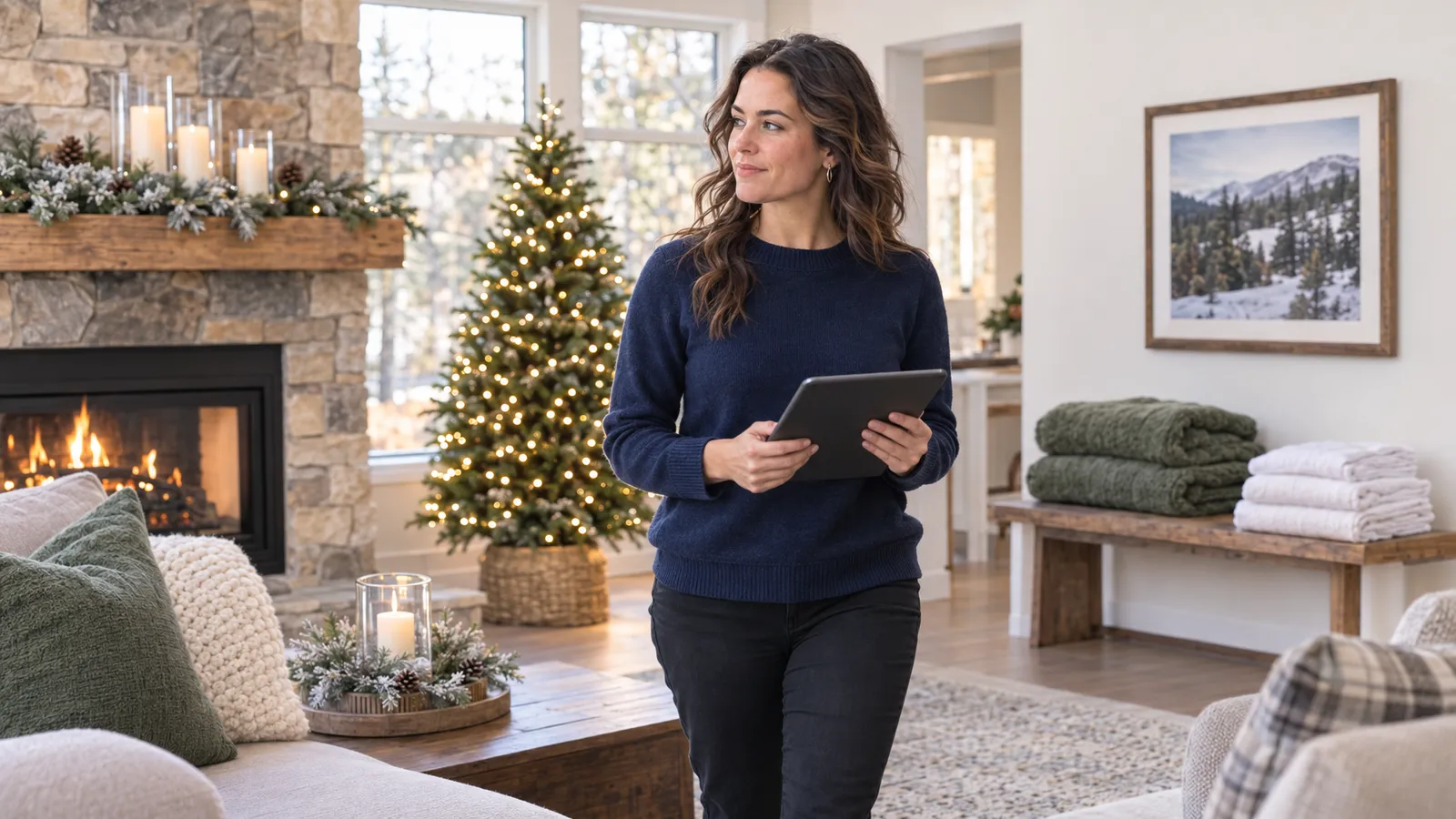
A vacation rental holiday season checklist prepares your properties, crews and guest messages for the busiest weeks of the year: tighter turnovers, larger groups, holiday cooking, decorations and winter weather. Start early, confirm staffing and supplies, make safety non-negotiable and give guests clear holiday-specific information before they arrive.
Key Takeaways
The holiday season rewards operators who plan crews, supplies, safety and guest messages weeks before the first peak arrival.
| Point | Details |
|---|---|
| Plan turnovers early | Map every peak-week check-out and check-in, confirm crews and vendors, and assign backups. |
| Stock a buffer | Extra linens, kitchen basics, trash bags and safety items prevent mid-season supply runs. |
| Keep decorations safe | Use flameless candles and inspected lights, and keep décor away from heat sources and exits. |
| Prepare for weather | Finish cold-weather maintenance, test alarms and watch official forecasts before arrivals. |
| Communicate clearly | Share occupancy, holiday house rules, trash days and after-hours contacts before guests arrive. |
Table of Contents
- What Is a Vacation Rental Holiday Season Checklist?
- How Do You Plan Holiday Turnovers and Crew Schedules?
- What Supplies Should You Stock Before Peak Weeks?
- How Do You Make Holiday Decorations Safe in a Rental?
- How Do You Reduce Kitchen and Cooking Fire Risk?
- How Should You Prepare Rentals for Winter Weather?
- What Should Guest Communication Look Like Over the Holidays?
- What Belongs on a Holiday Season Checklist?
- What Operators Get Wrong About the Holiday Season
- How RealtevoOS Handles Holiday Season Operations
- Frequently Asked Questions
- Sources
What Is a Vacation Rental Holiday Season Checklist?
A vacation rental holiday season checklist is a written plan that gets your properties, crews and guest messages ready for the busiest, most crowded weeks of the year before the first holiday arrival.
The holidays change how homes are used. Groups are larger, guests cook big meals, decorations and candles appear, and winter weather can disrupt travel and turnovers in many markets. A checklist turns those predictable changes into tasks with owners and deadlines.
- Operations — turnover schedules, crew coverage, vendor availability and backup plans for back-to-back stays.
- Property readiness — supplies, decorations, fire safety equipment, heating and winter weather preparation.
- Guest experience — clear pre-arrival messages, holiday-specific house rules and fast responses when something goes wrong.
How Do You Plan Holiday Turnovers and Crew Schedules?
You plan holiday turnovers by mapping every check-out and check-in across the peak weeks, confirming crew availability early and building a backup for each property.
Holiday calendars tend to stack same-day turnovers on the same dates, while cleaners and vendors take their own time off. Planning the schedule before bookings fill in prevents last-minute gaps.
- Map the peak dates — list every same-day turnover across your portfolio for the weeks around each holiday and flag the tightest windows.
- Confirm crew availability — ask each cleaner and inspector which dates they can work, and confirm it in writing rather than assuming normal schedules.
- Assign backups — name a backup cleaner or crew for every property, and share access instructions and checklists with them in advance.
- Book vendors early — confirm when your HVAC, plumbing, appliance and snow-removal vendors are reachable over the holidays, and who covers when they are closed.
For a deeper look at timing tight changeovers, see our guide to coordinating same-day turnovers. Teams that run turnovers in a shared system such as RealtevoOS can see the whole holiday calendar and crew assignments in one view.
What Supplies Should You Stock Before Peak Weeks?
Stock enough linens, consumables, kitchen basics and safety items to handle larger groups and back-to-back stays without an emergency supply run.
Supply stores and delivery services are busier during the holidays, and some close on the holidays themselves. Building a buffer before peak weeks keeps turnovers on schedule.
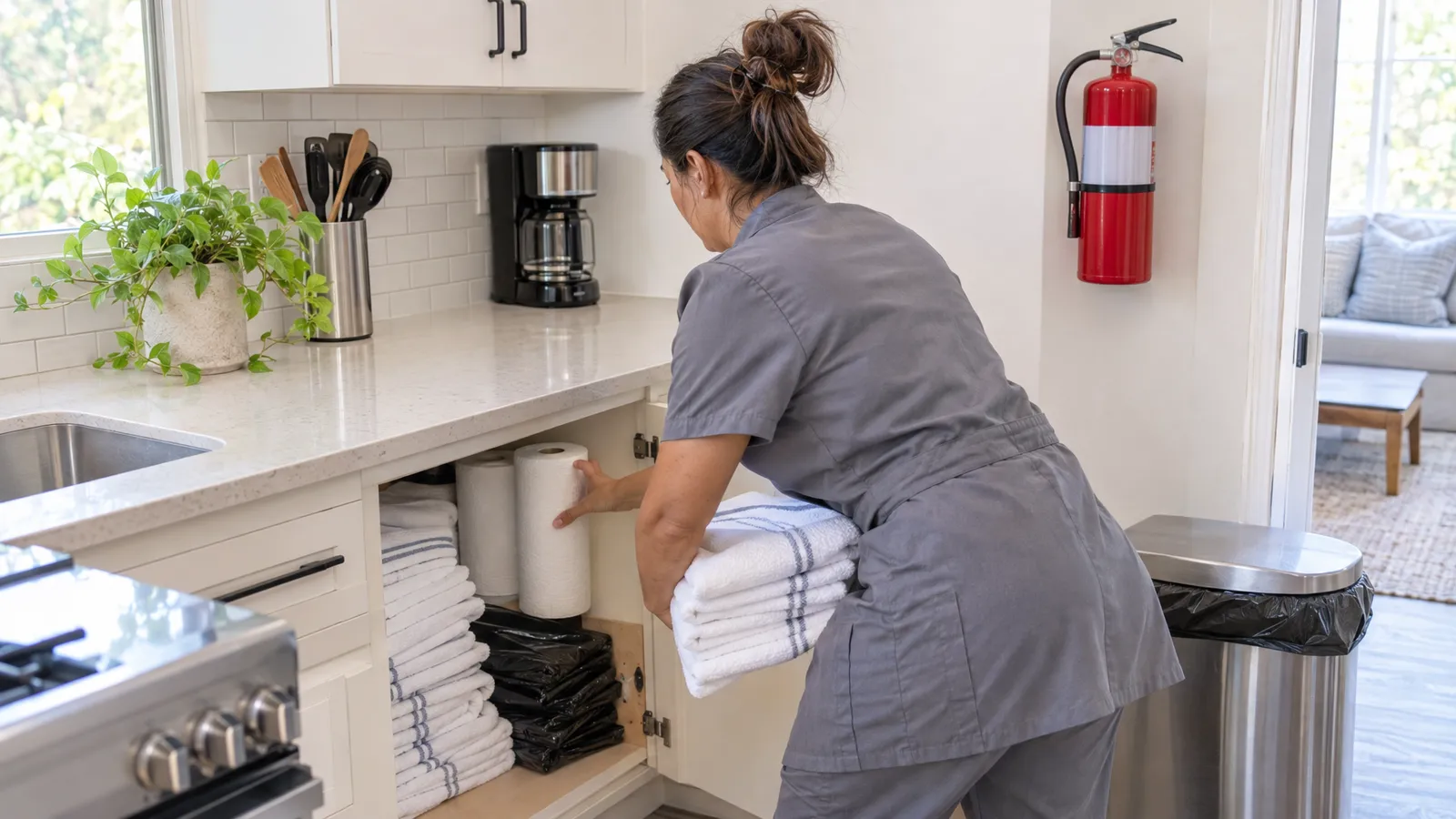
- Extra linen sets — plan for full bed and bath sets for every bed, including sofa beds and air mattresses guests are allowed to use, plus spares for quick swaps.
- Kitchen essentials — dish soap, dishwasher detergent, paper towels, aluminum foil, food storage containers and a full set of serving pieces for larger meals.
- Trash and recycling — extra heavy-duty trash bags and clear instructions on collection days, which often shift around holidays.
- Safety items — spare batteries for smoke and carbon monoxide alarms, flashlights, a working fire extinguisher and a pot lid guide in the kitchen.
- Winter extras — extra blankets, ice melt and a snow shovel in markets that see winter weather.
Holiday groups also leave more food behind. The EPA notes that one-third of all food in the United States goes uneaten and recommends planning and storage habits to prevent waste (EPA — Preventing Wasted Food at Home). Ask guests to take or discard perishables, and make fridge clean-out a firm step in every holiday turnover.
How Do You Make Holiday Decorations Safe in a Rental?
Make holiday decorations safe by keeping them simple, choosing flameless candles and tested lights, and placing everything well away from heat sources and exits.
Decorations are a real fire risk. The National Fire Protection Association (NFPA) reports that U.S. fire departments responded to an estimated average of 835 home structure fires per year that began with decorations, excluding Christmas trees, and that electrical distribution or lighting equipment was involved in two in five home Christmas tree fires (NFPA — Winter Holidays). NFPA also notes that candles started 49% of home decoration fires in December, compared with one-third year-round.
- Use flameless candles — NFPA suggests flameless candles as an alternative (NFPA — Candle Safety); in a rental, they remove the risk of a guest leaving a flame burning.
- Keep distance from heat — Ready.gov advises keeping a tree at least three feet from any heat source, such as fireplaces, radiators, heat vents or lights, and not blocking an exit (Ready.gov — Home Fires).
- Inspect light strings — Ready.gov recommends replacing any string of lights with worn or broken cords or loose bulb connections, and turning lights off at night or when leaving the house.
Put a short decoration note in your house rules: what guests may add, whether real candles are allowed, and that lights should be switched off when the home is empty or everyone is asleep.
How Do You Reduce Kitchen and Cooking Fire Risk?
Reduce holiday cooking fire risk by checking the kitchen equipment before peak weeks, keeping safety items in plain sight and giving guests short, practical cooking reminders.
Holiday meals put more pressure on rental kitchens than any other time of year. NFPA reports that Thanksgiving is the peak day for home cooking fires, followed by Christmas Day and Christmas Eve, and that unattended equipment is a factor in one quarter of reported home cooking fires and half of the associated deaths (NFPA — Cooking Safety).
- Inspect appliances — test every burner, the oven, range hood and microwave, and clean grease buildup before the season starts.
- Mount a fire extinguisher — Ready.gov lists keeping a fire extinguisher available among basic cooking safety steps; make sure it is charged, visible and easy to reach.
- Post short reminders — NFPA advises staying in the kitchen while frying, grilling, boiling or broiling food, and keeping a lid nearby to smother small grease fires.
- Set rules for outdoor cooking — Ready.gov recommends placing barbecue grills at least 10 feet from siding and deck railings, and out from under eaves and overhanging branches.
How Should You Prepare Rentals for Winter Weather?
Prepare rentals for winter weather by finishing cold-weather maintenance before peak weeks, watching official forecasts and having a plan for guests when storms affect travel or utilities.
Ready.gov notes that winter storms can last a few hours or several days and can cut off heat, power and communication services, and that Winter Storm Warnings are usually issued 12 to 24 hours before the event is expected to begin (Ready.gov — Winter Weather). The National Weather Service explains that winter storms can bring snow, sleet and freezing rain across the entire United States, including cities as far south as Atlanta and Dallas (National Weather Service — Winter Safety).
- Finish cold-weather maintenance — service heating systems, check insulation and weather stripping, and protect pipes from freezing; our vacation rental winterization checklist covers the details.
- Test alarms — Ready.gov recommends installing and testing smoke alarms and carbon monoxide detectors with battery backups.
- Plan snow and ice removal — confirm who clears driveways, walkways and steps, and how quickly after a storm.
- Watch forecasts for arrival days — check official alerts before each holiday arrival and message guests early if travel or access could be affected.
What Should Guest Communication Look Like Over the Holidays?
Holiday guest communication should be early, clear and specific, covering arrival details, house rules for gatherings and how to reach your team when offices are closed.
- Confirm group size — restate the maximum occupancy and your visitor policy before arrival, since holiday stays often grow with friends and family.
- Share holiday-specific rules — cover decorations, candles, fireplaces, outdoor cooking, parking for extra cars and quiet hours.
- Explain trash and recycling — holiday collection schedules often change, so tell guests where trash goes and when.
- Publish after-hours contacts — make sure guests know how to reach someone on the holiday itself, including for urgent maintenance.
- Set check-out expectations — list the few tasks you want done before departure, such as starting the dishwasher, removing perishables and taking out trash.
What Belongs on a Holiday Season Checklist?
A complete holiday season checklist covers scheduling, supplies, safety, weather and communication, with each item assigned to a person and a date.
- Map every holiday arrival and same-day turnover across the portfolio.
- Confirm cleaner, inspector and vendor availability for each peak date, and assign backups.
- Stock extra linens, kitchen basics, bathroom consumables, trash bags and winter supplies.
- Test smoke and carbon monoxide alarms and check fire extinguishers in every unit.
- Inspect appliances, clean range hoods and confirm heating systems are serviced.
- Set up simple, safe decorations: flameless candles, inspected lights, nothing near heat or exits.
- Update house rules for occupancy, decorations, candles, fireplaces, grills and parking.
- Prepare pre-arrival, mid-stay and check-out messages with holiday-specific details.
- Publish after-hours contacts and the escalation plan for urgent maintenance.
- Review forecasts before each arrival and message guests early if weather may affect travel.
- Add fridge clean-out, trash removal and a quick pest check to every holiday turnover.
- After the season, record what broke, what ran out and what to change for next year.
What Operators Get Wrong About the Holiday Season
The most common mistake is treating the holidays like a normal busy weekend, when larger groups, closed vendors and winter weather change almost every part of the operation.
- Starting too late — crew and vendor availability disappears quickly; confirming schedules in the final week leaves no room for backups.
- Over-decorating — elaborate décor, live trees and real candles add fire risk and turnover time without improving most stays.
- Assuming normal turnover times — more guests mean more laundry, dishes and trash, so standard cleaning windows often run long.
- Leaving food behind — perishables and full trash left between back-to-back stays invite odors and pests; our vacation rental pest control guide covers prevention and turnover checks.
- No after-hours plan — a guest with no heat or a clogged drain on a holiday needs a fast answer, not a voicemail.
How RealtevoOS Handles Holiday Season Operations
RealtevoOS gives property managers one place to coordinate the people, messages and maintenance work that the holiday season multiplies.
- Unified guest inbox — guest messages from your booking channels and direct bookings arrive in one inbox, so holiday questions and urgent reports are visible to the whole team.
- AI that learns your SOPs — you can teach the AI your holiday house rules, check-out steps and escalation plan, so drafted replies follow your written procedures.
- Turnover and crew coordination — cleaner scheduling, job tracking and quality inspections help you see every holiday turnover and who is assigned to it.
- Maintenance tracking — guest reports and inspection findings become tracked maintenance tickets with notes and photos, from first message to resolution.
RealtevoOS does not replace local vendors or emergency services; it helps your team plan ahead, respond consistently and keep a clear record through the busiest weeks of the year.
Frequently Asked Questions
When should I start preparing my vacation rental for the holidays?
Start several weeks before the first peak arrival. Crew and vendor availability, supply orders and house rule updates all take time, and confirming them early leaves room to arrange backups.
Should I allow real candles in a vacation rental?
Many managers choose flameless candles instead. NFPA reports that candles started 49% of home decoration fires in December and suggests flameless candles as an alternative, which removes the risk of a guest leaving a flame burning.
How do I prepare a rental kitchen for holiday cooking?
Test all appliances, clean grease from the range hood, mount a charged fire extinguisher and post short reminders. NFPA notes Thanksgiving is the peak day for home cooking fires and that unattended cooking is a factor in one quarter of them.
What should a holiday pre-arrival message include?
Confirm maximum occupancy, holiday-specific house rules, parking, trash and recycling days, after-hours contacts and check-out tasks.
How do I handle winter storms during holiday stays?
Finish cold-weather maintenance in advance, watch official forecasts before arrival days and message guests early. Ready.gov notes Winter Storm Warnings are usually issued 12 to 24 hours before the event.
Sources
- National Fire Protection Association — Holiday Fire Safety Tips
- National Fire Protection Association — Candle Safety
- National Fire Protection Association — Cooking Safety
- Ready.gov — Home Fires
- Ready.gov — Winter Weather
- National Weather Service — Winter Safety
- U.S. EPA — Preventing Wasted Food at Home