Multi-Channel Booking Management for Vacation Rentals
Discover what is multi-channel booking management and how it boosts occupancy and enhances guest experiences for vacation rentals.

Multi-Channel Booking Management for Vacation Rentals
Multi-channel booking management is the centralized process of coordinating reservations, rates, and availability across multiple booking platforms simultaneously. In the vacation rental industry, the recognized industry term is “channel management,” and understanding what is multi-channel booking management gives property managers a clear path to fewer errors, higher occupancy, and better guest experiences. Platforms like Airbnb and Vrbo each operate independently, which means a single property can generate conflicting calendars, mismatched rates, and double bookings without a system holding everything together. The solution is a multi-channel booking system that acts as the single source of truth for every reservation.
What is multi-channel booking management and how does it work?
Multi-channel booking management is a system that pulls reservations, rates, and availability from every connected platform into one centralized hub. Property managers no longer update each channel manually. Instead, a change made in one place pushes instantly to all connected platforms, whether that is Airbnb, Vrbo, Booking.com, or a direct booking website.
The technical backbone of this approach is two-way channel synchronization, which updates bookings instantly across platforms and reduces manual errors. “Two-way” means the system both sends updates out and receives new reservations in, so nothing falls through the cracks. This is what separates a true multi-channel reservation management setup from simply copying and pasting availability between tabs.

Understanding your booking channel strategy starts here. A channel strategy defines which platforms you list on, how you price across them, and how you prioritize direct bookings to reduce commission costs. Without a centralized system, executing that strategy at scale is nearly impossible.
What are the essential features of a multi-channel booking system?
Effective multi-channel booking management relies on a specific set of features working together. The absence of even one creates gaps that lead to errors and lost revenue.
The core features property managers need include:
- Centralized calendar view. A single calendar showing all reservations across every platform, color-coded by source. For high-volume operations, list views outperform monthly calendars because they surface complex pricing rules and stay restrictions more clearly.
- Integrated payment processing. Collecting and reconciling payments from multiple platforms inside one dashboard eliminates the need to log into each channel separately.
- Automated guest notifications. Email and SMS messages sent automatically at key moments, such as booking confirmation, check-in instructions, and post-stay review requests.
- Rate and availability synchronization. Any pricing change or blocked date updates across all connected channels in real time.
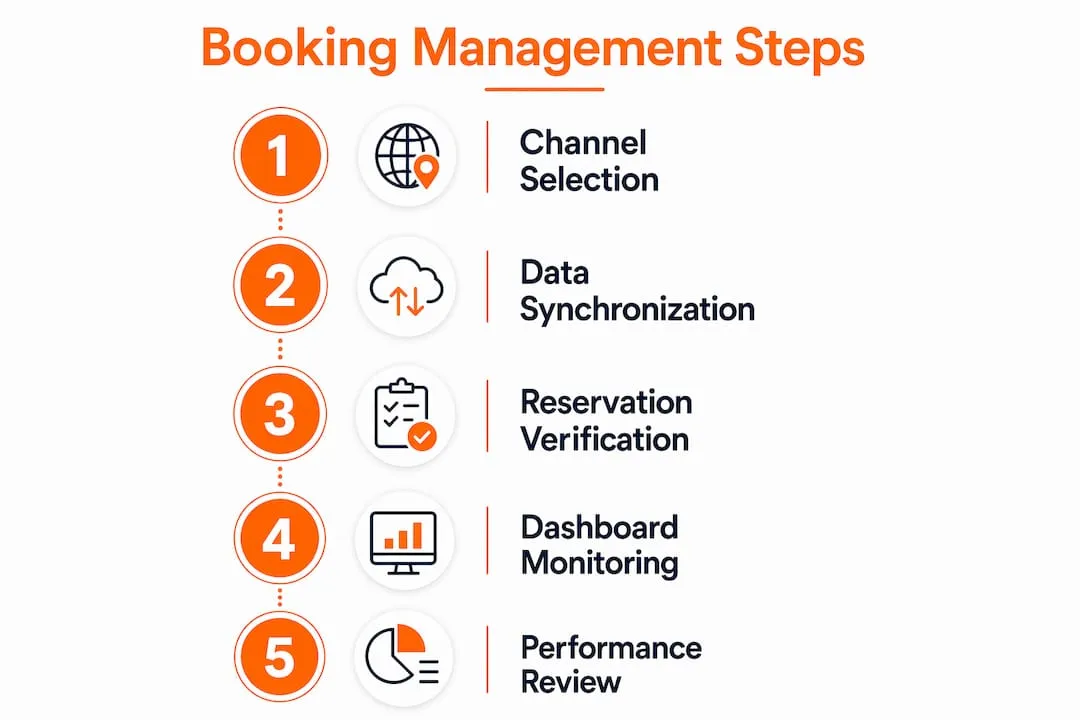
- Reservation data verification. Every booking should confirm six critical data points: guest name, event dates, inclusions, cancellation policy, total cost, and confirmation status. Verifying these six points per reservation minimizes booking disputes and errors significantly.
Pro Tip: Set your channel manager to flag any reservation missing one of the six verification data points before it moves to confirmed status. Catching gaps at intake costs seconds. Fixing them after check-in costs hours.
The admin dashboard ties all of these features together. A well-designed dashboard gives property managers a real-time view of occupancy, revenue, and guest status without switching between platforms. For a deeper look at what a strong dashboard setup looks like, the unified dashboard guide from Realtevoos covers the key elements managers need.
How does channel management reduce errors and improve efficiency?
The biggest operational risk in vacation rental management is the double booking. It damages guest trust, triggers penalties on OTA platforms, and creates refund headaches. Multi-channel reservation management eliminates this risk through automation.
Here is how the efficiency gains stack up in practice:
- Automatic availability blocking. The moment a reservation is confirmed on any platform, the system blocks those dates everywhere else. No manual step required.
- Centralized rate updates. Changing your nightly rate or adding a weekend surcharge updates across all channels at once. This is especially valuable when managing complex pricing tiers and minimum stay restrictions.
- Reduced administrative workload. Integrated systems eliminate double handling of reservation data, which speeds up every operational task from check-in prep to financial reporting.
- Real-time market response. When demand spikes, AI-powered pricing tools adjust rates automatically. AI-driven pricing optimization recommends optimal rates and promotions, increasing direct bookings and reducing OTA commission costs.
- Fewer administrative errors. Property managers using integrated systems report significant time savings and measurably fewer errors compared to manual management methods.
Channel management platforms synchronize availability and pricing across 150+ OTAs and booking platforms simultaneously. That scale of distribution, managed manually, would require a full-time staff member doing nothing but updating calendars. Automation reclaims that time for guest-facing work.
For property managers running multiple properties, centralizing reservation data is the prerequisite for scaling. The multi-property data centralization guide from Realtevoos walks through the specific steps for building that foundation.
How does multi-channel management improve the guest experience?
Guest experience and operational efficiency are not separate goals. They are the same goal viewed from different angles. When your systems run cleanly, guests feel it immediately.
The most direct impact comes from automated communication. Automated guest notifications via email and SMS reduce booking disputes and improve on-time arrivals. A guest who receives a confirmation within minutes, a check-in reminder 24 hours before arrival, and a checkout summary on departure day has a fundamentally different experience than one who has to chase down information.
Key guest experience benefits of a multi-channel booking system include:
- Faster booking confirmations. Automated systems confirm reservations instantly, which reduces guest anxiety and the likelihood of a cancellation.
- Accurate reservation details. When all six data points are verified at booking, guests receive correct information from the start. Fewer corrections mean fewer frustrated guests.
- Direct booking promotion. Centralized systems make it easier to drive traffic to your own booking page, reducing OTA commission fees and giving you more control over the guest relationship.
- AI-driven review management. Automated review response tools handle post-stay feedback at scale, maintaining your reputation across platforms without manual effort.
Pro Tip: Use your channel manager’s messaging templates to send a mid-stay check-in message on day two of every reservation. Guests who feel checked on during their stay leave better reviews and report higher satisfaction, even when minor issues arise.
The connection between communication quality and guest satisfaction is direct. A property manager who responds to a question in 30 seconds via automation beats one who responds in three hours manually, every time. For a practical look at how AI handles this at scale, the AI in property management examples from Realtevoos show real communication workflows.
How to implement multi-channel booking management effectively
Implementing a multi-channel booking system requires a structured approach. Choosing a platform and hoping for the best leads to gaps in synchronization and missed revenue.
| Implementation step | What to focus on |
|---|---|
| Evaluate system features | Match platform capabilities to your property count, channel mix, and pricing complexity |
| Verify real-time sync | Confirm the system uses two-way synchronization, not delayed batch updates |
| Audit your channel list | List every OTA and direct channel you use, then confirm the system connects to all of them |
| Train your team | Run your staff through the dashboard, calendar tools, and notification workflows before going live |
| Monitor booking data | Review reservation reports weekly to catch pricing gaps, high-cancellation channels, and occupancy trends |
The training step is the one most managers skip. A powerful system used incorrectly produces the same errors as a weak one. Spend time on the dashboard before you need it under pressure.
Monitoring booking data after launch is where the real gains appear. Dynamic pricing strategies work best when you review performance data regularly and adjust your channel mix based on what the numbers show. The goal is not just to be listed everywhere. The goal is to know which channels drive the most profitable bookings and weight your strategy accordingly.
For hospitality operators learning how digital reservations work across platforms, the fundamentals of channel management apply equally to vacation rentals and traditional lodging. The underlying logic is the same: one source of truth, distributed everywhere.
Key Takeaways
Multi-channel booking management works because it replaces fragmented, manual channel updates with a single synchronized system that controls rates, availability, and guest communication across every platform at once.
| Point | Details |
|---|---|
| Core definition | Channel management centralizes reservations, rates, and availability across all booking platforms in real time. |
| Error prevention | Verifying six data points per reservation and using two-way sync eliminates double bookings and disputes. |
| Efficiency gains | Automation removes manual rate and availability updates, freeing hours of administrative work each week. |
| Guest experience | Automated notifications and instant confirmations directly raise guest satisfaction and review scores. |
| Implementation priority | Real-time two-way synchronization is the non-negotiable feature. Everything else builds on top of it. |
Why most managers underestimate the cost of doing this manually
I have worked with property managers who ran 10, 20, even 40 properties using spreadsheets and manual calendar updates. Every single one of them had a double booking story. Not a near-miss. An actual double booking that cost them a guest relationship, a penalty, and hours of damage control.
The mistake I see most often is treating channel management as a cost rather than a revenue decision. Managers look at the monthly subscription fee and compare it to zero. They do not compare it to the commission fees they pay OTAs on every booking that could have been direct, or the hours spent updating five platforms every time a rate changes.
The second mistake is underestimating the compounding effect of small errors. One missed calendar update creates a double booking. That double booking triggers a cancellation. That cancellation drops your platform ranking. A lower ranking reduces visibility. Less visibility means fewer bookings. The whole chain starts with one manual step that automation would have handled in under a second.
Centralized control is not just about convenience. It is the structural requirement for scaling a vacation rental portfolio without adding headcount. Every property you add to a manual system increases your error risk. Every property you add to a synchronized system costs you almost nothing in additional management time.
— Jose Villeda
How Realtevoos supports multi-channel booking management
Realtevoos is built specifically for vacation rental property managers who need centralized control across multiple properties and channels.
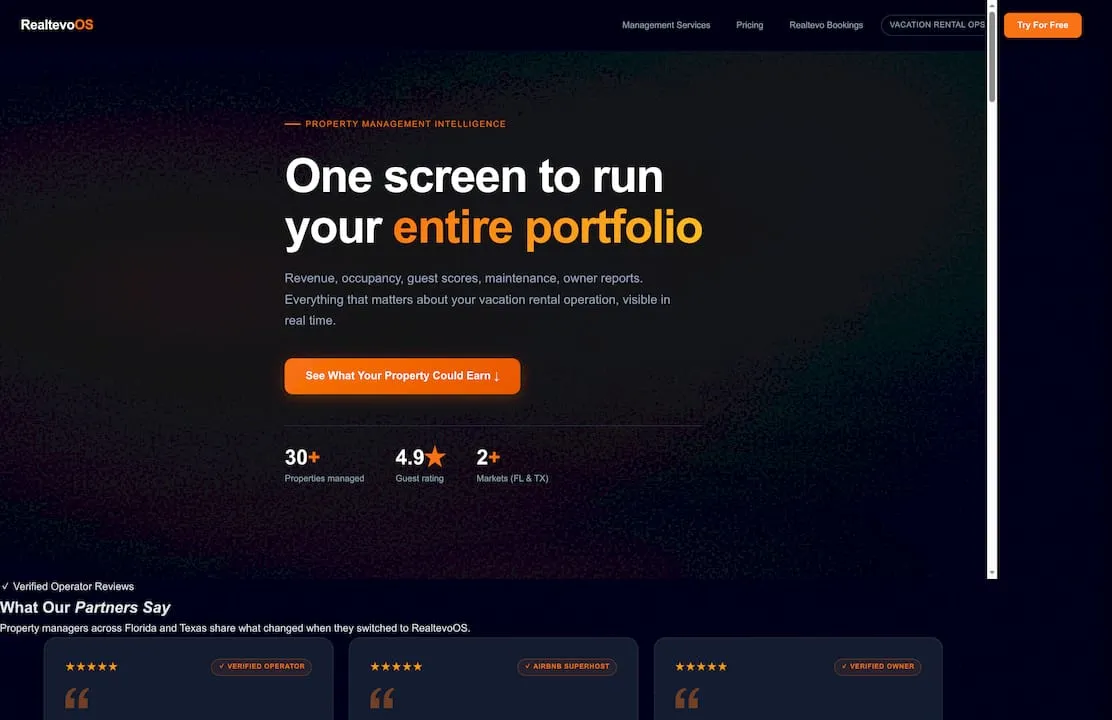
The Realtevoos management deck consolidates reservations from Airbnb, Vrbo, and other platforms into a single dashboard with real-time synchronization, AI-driven pricing recommendations, and automated guest communication. Property managers using Realtevoos report saving several hours each week by eliminating manual updates and fragmented data entry. The platform scales with your portfolio, so adding new properties does not add proportional management overhead. For managers ready to move past manual channel updates, Realtevoos provides the infrastructure to do it without rebuilding your entire workflow from scratch.
FAQ
What is multi-channel booking management in vacation rentals?
Multi-channel booking management is the process of synchronizing reservations, rates, and availability across multiple booking platforms from a single system. It prevents double bookings and reduces manual administrative work for property managers.
How does a channel manager prevent double bookings?
A channel manager uses two-way real-time synchronization to block dates across all connected platforms the moment a reservation is confirmed. No manual update is required, which eliminates the gap where a second booking could slip through.
What data points should every reservation include?
Every reservation should verify six data points: guest name, event dates, inclusions, cancellation policy, total cost, and confirmation status. Confirming all six at intake minimizes disputes and errors throughout the guest stay.
How does multi-channel management affect OTA commission costs?
Centralized systems make it easier to promote direct bookings through your own booking page, reducing reliance on OTAs that charge commission fees on every reservation. AI-powered pricing tools also help identify which channels deliver the most profitable bookings.
What is the most important feature to look for in a multi-channel booking system?
Real-time two-way synchronization is the most critical feature. Without it, availability updates lag behind actual bookings, which creates the exact double-booking risk the system is supposed to prevent.